"How to succeed in overseas expansion? You keep going until it works" – A BD professional crossing borders with K-beauty
15 min read
Related articles
BD Insights
How to Build a Small but Strong Team
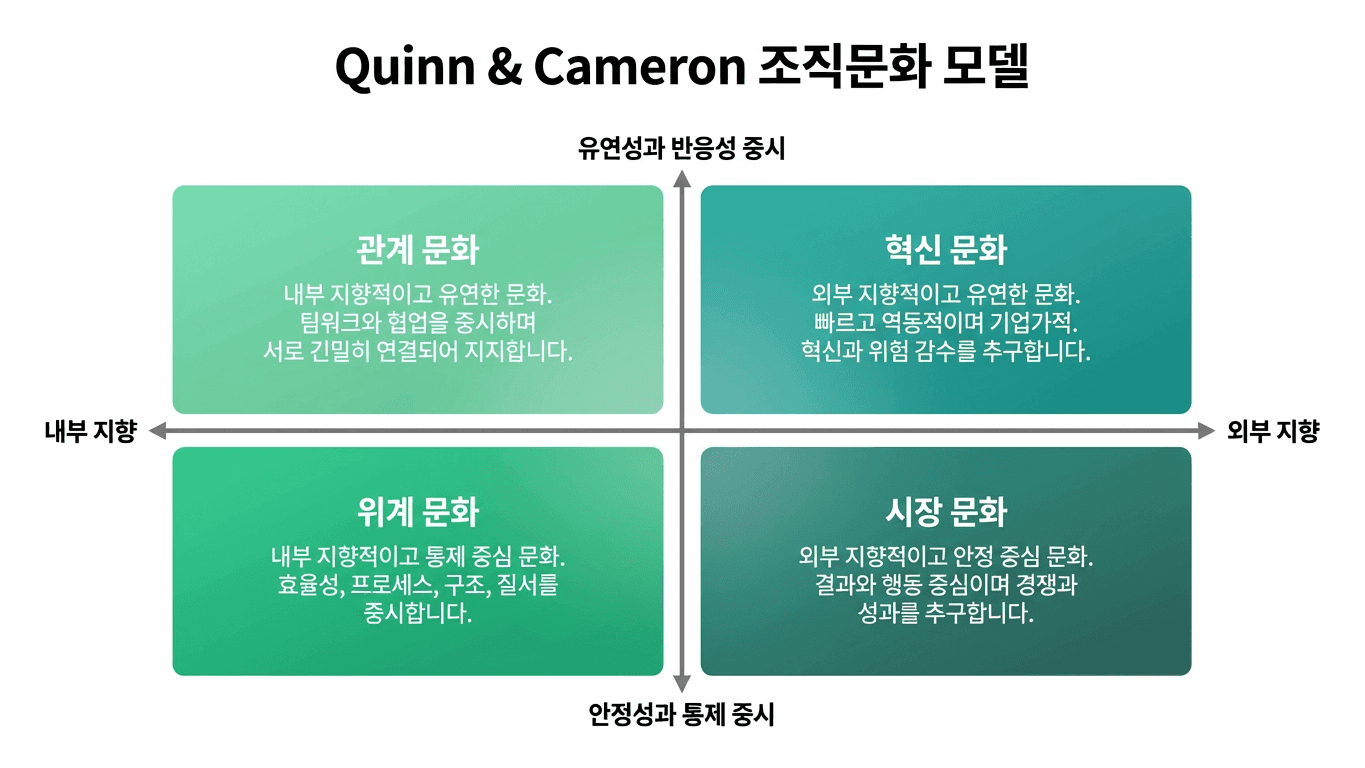
Assembling top individuals doesn't make a team. This article outlines how to design a small but solid team using three principles—role design, execution autonomy, and communication structure—along with the Quinn and Cameron organizational growth model.
Aug 31, 20264 min read
BD Insights
Fleet Learning: How to Turn Problem-Solving Into Organizational Capability
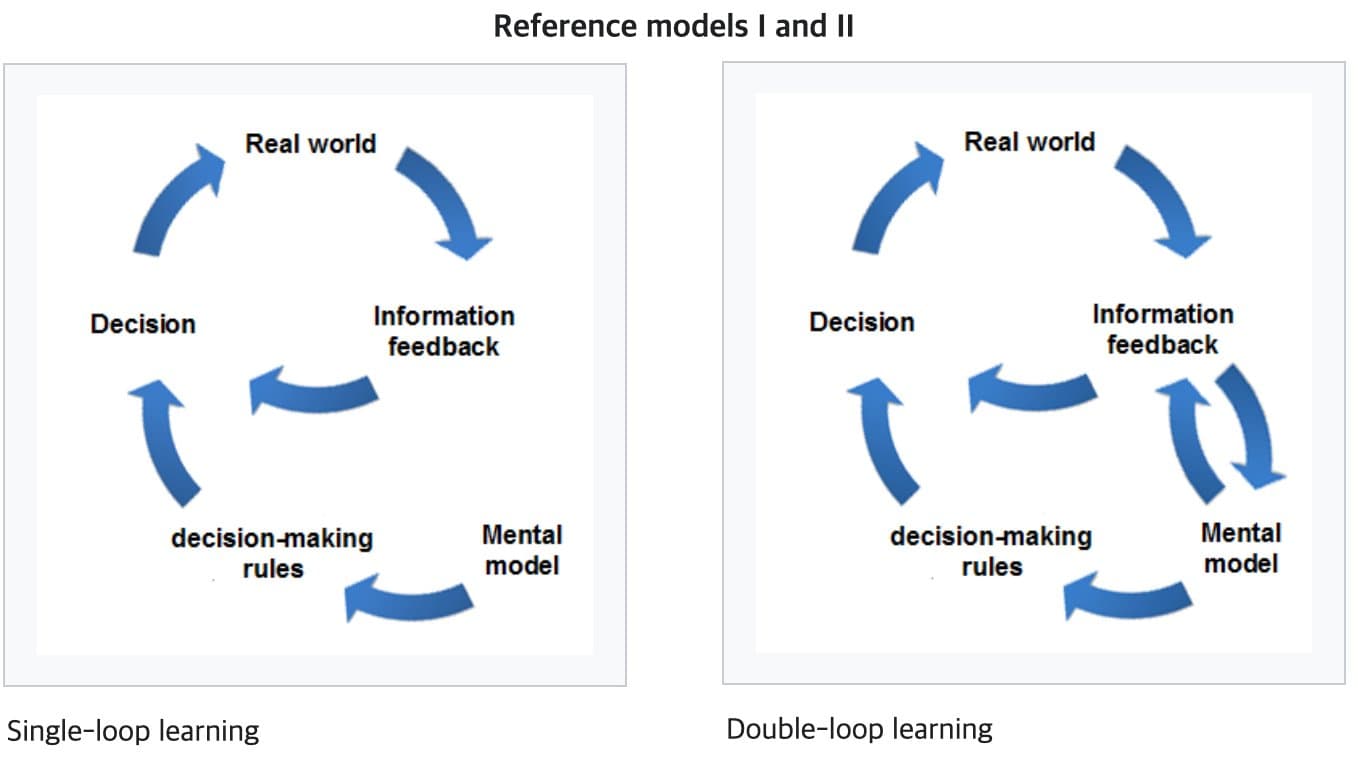
Of Google's countless projects, only about 50% succeed. The company even runs a unique space called 'The Google Cemetery' that displays tombstones of discontinued services. Google dissects these failures like autopsying a body, identifying direct and indirect causes of problems, documenting them precisely, and establishing countermeasures.
Aug 21, 20266 min read
BD Insights
Turning Opportunities into Organizational Capabilities
Open innovation is a paradigm where companies must intentionally bring in external ideas and technologies, share internal assets with the outside world, and create value to survive and grow. In other words, it's about breaking down organizational boundaries and increasing the probability of innovation through active external engagement—clearly demonstrating why 'absorptive capacity' is a core competitive advantage for modern startups.
A student studying abroad and dreaming of becoming a diplomat got the chance to test-drive a Tesla. The moment he experienced a car that changed lanes by itself, a dream took hold: 'I want to be like Elon Musk.' That pull led him not to diplomacy, but to entrepreneurship.
His path never stayed in one place. He launched businesses across different fields, closed some, and rescued others from crisis. Ten years later, he found himself back in the global market where he'd started – but this time, he's not alone. Hoping more K-beauty brands can experience a bigger stage, he's knocking on buyers' doors himself.
Some say you should dig deep into one thing, but he's walked the opposite path and proven his own way. Each time he moved to a new field, he didn't hesitate to learn from scratch. That accumulated experience is now the asset that lets him carve out a path on the most difficult stage of all: the global market. We followed his journey to see where he's headed, having run nonstop without ever staying still.
Interview navigation 1. The first global stage that launched an entrepreneur 2. A fierce record of execution, from webtoons to franchises 3. The reality of K-beauty global expansion 4. A BD professional dreaming of becoming a super-connector
The first global stage that launched an entrepreneur
Q. How do you introduce yourself when you first meet someone?
These days I say, "I'm Kim Eun-chong, and I help Korean K-beauty companies export overseas." In the past, I rarely had occasion to introduce myself that way. I'd done so many different things. But recently, as I've focused on global exports, that became the one line that best explains who I am now.
Q. Among your diverse career, the keyword that stands out most might be 'global.' Your first overseas experience was studying in China, right?
I first went to China in 2003. I was in middle school then. I started near Shenzhen, moved to Shanghai, then transferred to an international school in Beijing and graduated from there. My mother encouraged me to go, and at the time there was this sentiment that 'China will soon be G2, so it's good to be there early.' I was still young, and without my family, adapting overseas wasn't as easy as expected. Still, from that point on, I made all the major decisions myself – like where to go to school. I became independent quickly. Looking back, becoming independent so early was really good for me.
Q. After studying abroad for so long, jumping straight into entrepreneurship instead of joining a company isn't the typical choice. Did you always dream of starting a business?
Not at all. My original dream was to be a diplomat. I'd also lived in the Philippines for about a year, so having moved through multiple countries, I was drawn to things like international relations. I wanted to work for something like a UN agency, coordinating between nations. But my school (SUNY Stony Brook) didn't have international relations, so I majored in Asian studies, the closest thing. I kept going to school thinking I'd prepare for a diplomatic academy.
But during winter break in 2015, before graduation, I spotted a car I'd never seen before on campus. It had some kind of panel on the front, and at first I thought it was an undercover police car. Turns out it was a Tesla. The car was so cool and fascinating. So I asked my older friend in San Francisco to help me test-drive one, and when I saw it change lanes on autopilot, I was completely blown away. That's how I became interested in Elon Musk. What he'd done was ultimately entrepreneurship – and he'd done it multiple times.
I started thinking, 'I want to do something this innovative and exciting in the future,' and from then on I prepared for entrepreneurship whenever I had time. I was a senior so I could take fewer classes, and outside of class I spent the rest of my time thinking about startup ideas.
Q. Wasn't preparing for entrepreneurship difficult? You must have felt some uncertainty.
Looking back, I'd actually been doing things close to entrepreneurship since middle and high school. There were a lot of Korean kids at the international school, and I created a kind of laundry service where I collected their laundry and returned it all at once. When people wanted Korean food, I'd collect orders, place them with a nearby Korean grocery, and charge a bit extra for delivery – a kind of distribution. I also bought clothes from Dongdaemun and sold them. There was Hallyu even back then. I didn't think 'this is entrepreneurship' – I just kept doing fun things whenever I saw an opportunity. After my military service, I ran a kids' cafe and helped a friend's startup. If anything, I was more used to entrepreneurship than employment.
Q. Let's talk about what happened after you officially launched. Tell us about your first startup after all that consideration.
I liked movies, figures, LEGOs – that kind of thing. I thought, 'If I do business in this area, it'll be fun, money aside.' I registered my business in November 2016 and started with an Ahn Jung-geun figure project.
I ran it as crowdfunding, and because the keyword was the independence movement, I'd get press inquiries every season and it became something of a topic. But it never had that explosive startup-like growth. So I started wondering, 'How long can I keep doing this? Should I really keep putting energy into it?' It was closer to a project than a full-fledged startup.
I don't regret what I did, but if I could go back, I wonder if it might have become one of the successful business models if I'd pivoted slightly or driven more aggressively—or if I'd tried one more time instead of stopping completely.
Q. Next was the English kindergarten. That was a completely new area too—what made you start?
My mother ran a kindergarten for a long time, but a redevelopment issue came up in that area and she had to relocate. Daycare centers and kindergartens face debt ratio restrictions, so we decided to purchase a building. It was difficult to operate in the existing kindergarten format, so we thought, 'Let's try an English kindergarten,' and launched it together in 2019. It was basically a family business.
Q. It was a familiar area for your mother, but for you the English kindergarten must have been quite different from your previous ventures.
Completely different. Regular kindergartens have government support and a voucher structure, so once you're established, enrollment isn't that hard. But English kindergartens have no such support—it's purely self-employed business. We had to create everything from scratch: the program, design, logo. We built a brand, launched it, and did sales—all within a year.
Then COVID hit. If even one student tested positive, we had to close for a week, and during that time teachers' salaries still had to be paid but we couldn't collect tuition normally. Operations were shaky for over two years like that.
Q. In your resume you called this period the 'valley of death.' How did you get through that difficult crisis?
Around the end of COVID, we switched from a personal brand to a franchise—completely. It was a mindset of 'let's try one last time.' Converting to a franchise meant starting from year zero again. The burden was heavy because we kept reinvesting—franchise fees, interior work. My mother was worried too. If it didn't work, we could really have reached the end. But fortunately that gamble paid off. Fortunately, we've been stable ever since, and recently we even converted it into a family corporation.
Q. After running the English kindergarten, you didn't start another business—you joined a company. Your career path really seems unpredictable.
I was grateful to receive a job offer and joined a webtoon studio called The Dream Entertainment on the new business team. When I joined there were about 40 people, when I left 70–80, and now it's probably close to 200. During COVID, webtoons exploded incredibly fast. I wanted to see and learn firsthand how the industry's top company works, how the webtoon system operates. In the end, that experience became a solid foundation for my next venture.
Q. And you actually used that experience to launch a webtoon studio and even had an exit.
We created a webtoon studio (Hero Studio), rapidly grew the IP, then sold it to a company that needed serialized content. It was just one year after launch. I didn't plan the exit from the start. As we went along and saw the possibility, I moved quickly. Regardless of the amount, I believed that as an entrepreneur you have to try various things.
Q. Your next career was neither entrepreneur nor employee—you were a professor. You served as a dedicated professor at the Youth Startup Academy until last year.
The Youth Startup Academy was a kind of aspiration for early-stage companies, especially for me. I'd been doing mentoring and lectures whenever I could, but mentoring is inevitably one-off, which left me wanting more. I thought if I could help companies grow over the long haul, it would be much more rewarding. Having built such a diverse career, I was confident I'd have plenty to say to any company that came through.
It was work where I felt fulfilled and did well as expected, but unfortunately due to an organizational restructuring my position changed and I had to leave sooner than anticipated. Still, I think it was a year where working closely with about 100 CEOs validated my eye for discovering 'hidden gems' that combine technical excellence and business viability.
Q. When your career changes this diversely, don't you get confused about how to define yourself?
I do, a lot. My wife is a finance professional who's worked at one company for 10 years—she's a specialist. I'm the opposite: a generalist, or you could say an omnivore.
But I have two confidences. First, whatever I do, I can earn as much as a regular employee does. Second, I'm someone who needs to scale up and explode the upside. I tried being an employee, but life didn't get better—I just fell into a rut and felt like there was no growth potential. If anything, the varied experiences helped me understand my disposition and capabilities. It's annoying to always get asked what I do, but I think anyone in business can relate.
The Reality of K-Beauty's Global Expansion
Q. You've come full circle back to global. What made you start the global business in earnest this year?
Among the 17 companies I oversaw at the Youth Startup Academy, the common challenge for even the successful ones was overseas expansion. They were doing well in Korea but found it overwhelming to go abroad—whether to Amazon or anywhere else. Growth in Korea has limits, so they absolutely had to go out, yet it was tough. As I helped them intermittently, I thought, 'This can't be just their problem.' Anyone doing K-beauty aims for overseas expansion, and I realized that if I had a solid distribution network, I could really help them and become a main player.
Q. But breaking into overseas distribution channels isn't something that just happens because you speak the language or lived abroad, right?
Exactly. Language actually has zero to do with it. In areas where you need years to establish yourself, I can't compete. They have no reason to do business with me either. So I target empty spaces. I can't break into Costco or Walmart right now anyway. Instead, I visit small pharmacies, do pop-ups, or partner with people opening new channels in live commerce or offline. I take the empty spots first and expand gradually from there.
Q. Occupying empty spaces first—that sounds like a pretty smart strategy. These days, when you meet teams dreaming of global expansion, are there any common misconceptions or misunderstandings they tend to have?
They don't want to take risks. It's quite paradoxical. People who have generated revenue through performance marketing in Korea have this ROAS mindset of 'invest ₩10,000, make ₩30,000,' and they bring that same thinking overseas. But unconditional revenue guarantees in foreign markets are not easy. Plus, right now it's too imbalanced. There are just too many Korean beauty companies. If you go to the COEX trade show, booths spill out into the streets. Even then there aren't enough spots. Buyers can only handle so many companies, and for them, sourcing one product from a major corporation can be more worthwhile than dealing with 100 indie brands.
People think 'if I work hard, buyers will recognize me,' but sadly, that's not how it works. The K-beauty boom is often a limited story about a few companies. Still, you have to go out there, so you need to be prepared to spend more overseas than you do on Korean marketing. That's not easy.
Q. You also created a community for people aiming for global business, right? Sharing information together definitely helps reduce trial and error.
While I was at the Korea SMEs and Startups Agency, I heard from many CEOs that they needed people to discuss business with. But there are already so many startup communities. I wondered if there was really a reason to create another one, but when I focused on the keyword 'global,' I saw meaning in it. If I could help Koreans going overseas or foreigners in Korea doing business here, this community would have its own unique character. That's how I launched the Young Global Startup Community (YGSC) last September. It's now grown to about 550 members across LinkedIn and KakaoTalk channels.
Q. I'm also curious whether you think the CEO should directly lead global expansion, or if companies should have a dedicated BD professional for it.
I think direct CEO involvement is best, but the key is 'decision-making authority.' Speed is everything overseas. The bigger the cost, the longer decisions take, and if you have layers of team leaders, division heads, and the CEO above you, it becomes too slow. A buyer's tone can change in a week or two, and competitors' products keep pouring in. Even if you're going to decline, you need an immediate answer so you can move on to the next opportunity. That's why it's fastest when the final decision-maker moves directly. If it's a working-level person but they have real authority—say, a director or team leader with only one or two people above them who can decide quickly—that works too.
In the era of KRW 15 trillion in K-beauty exports, are you still just shouting 'TikTok seeding'? Want to stop the leaky-bucket marketing and build a solid global sales network for your brand with BD Kim Eun-chong?
A BD Professional Dreaming of Being a Super Connector
Q. You've done so much work and continue to do so—I'm curious about your goals.
Short-term, it's to help more companies enter overseas markets. Since starting in earnest this year, four companies have successfully expanded. Three are doing live commerce in China, and one entered the Netherlands and received an initial order. This year, my goal is to get more companies out there rather than focusing on numbers. Next year, I want to surpass about KRW 5 billion in transaction volume and establish a solid position as a global distributor.
My long-term goal is to become a company that provides liquidity to early-stage companies. So many companies stagnate at the pre-A or Series A stage, and ACs and VCs often can't do follow-on investments. A company that can supply overwhelming liquidity to promising businesses, operating in the trillions—that's my ultimate dream.
Q. Finally, is there anything you'd like to say to those reading this interview?
My career has been all over the place, in a word. I've just kept doing what I wanted to do. Most societies prefer people who dig deep into one thing and build expertise. That kind of life is good too. But there are also people like me who live doing what they want. You can survive this way, you can make money this way. The risk is enormous, though, and even if you pursue multiple businesses, you need to have the mindset that 'I can do this well' every time. It's okay if it doesn't work out—I hope you have the courage to just try.
OUTRO
A journey that began with a single Tesla brought him to a completely different place ten years later. From figures to English kindergartens, to webtoons, to restaurants, and back to global exports. The fields changed every time, but what he did remained the same: when he saw an opportunity, he created it; when a crisis came, he broke through head-on; and after proving the potential, he moved on to the next thing.
That's why his way of talking about global expansion has no exaggeration. He candidly reveals the flip side of the K-beauty boom, and instead of sweet promises to guarantee revenue, he honestly tells you upfront that it's really difficult. Still, he says if you do it together, you can make it happen—that he'll personally carry someone's products and knock on buyers' doors. The Kim Eun-chong we met through this interview was someone who, if something doesn't work, changes the method and ultimately carves out a path no matter what. That's why his words 'I keep going until it works' don't sound empty.