BD Insights
Loading...

BD NOTE
가*

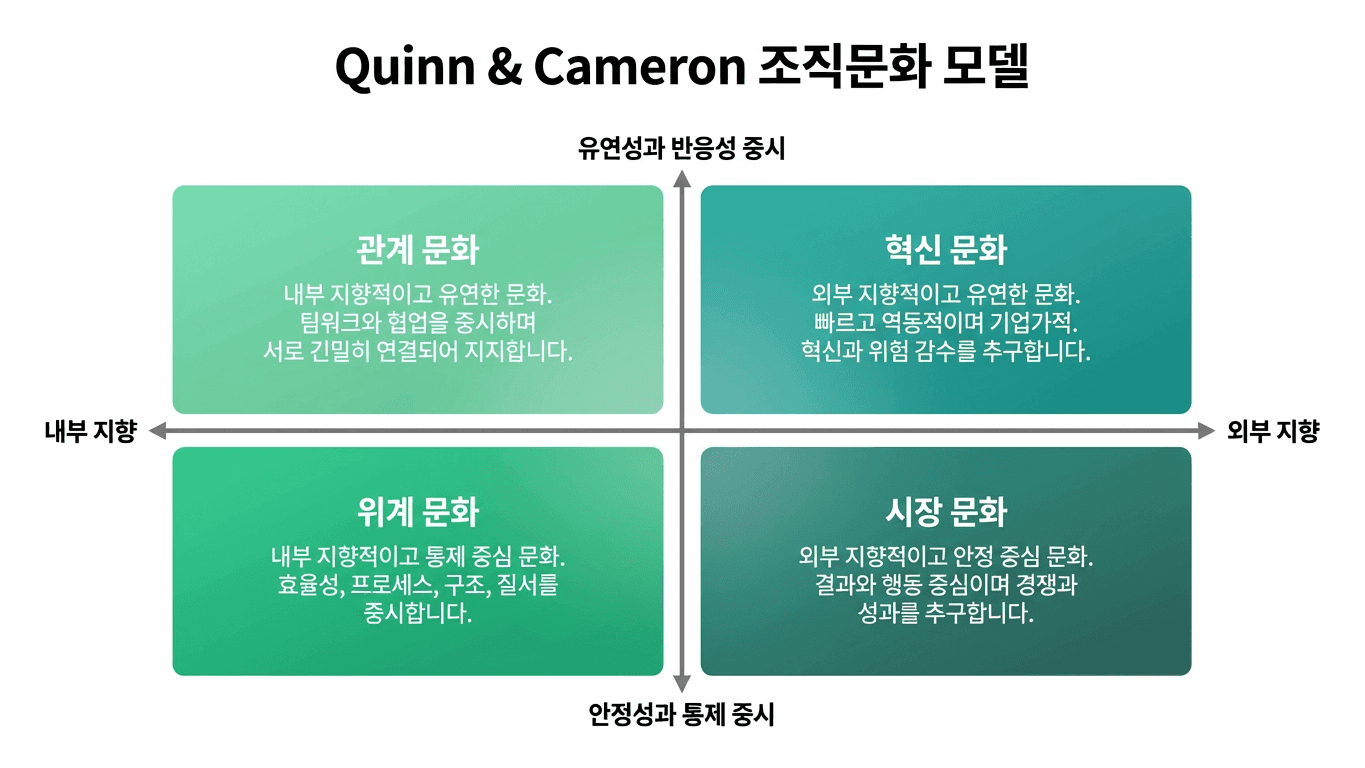
Assembling top individuals doesn't make a team. This article outlines how to design a small but solid team using three principles—role design, execution autonomy, and communication structure—along with the Quinn and Cameron organizational growth model.
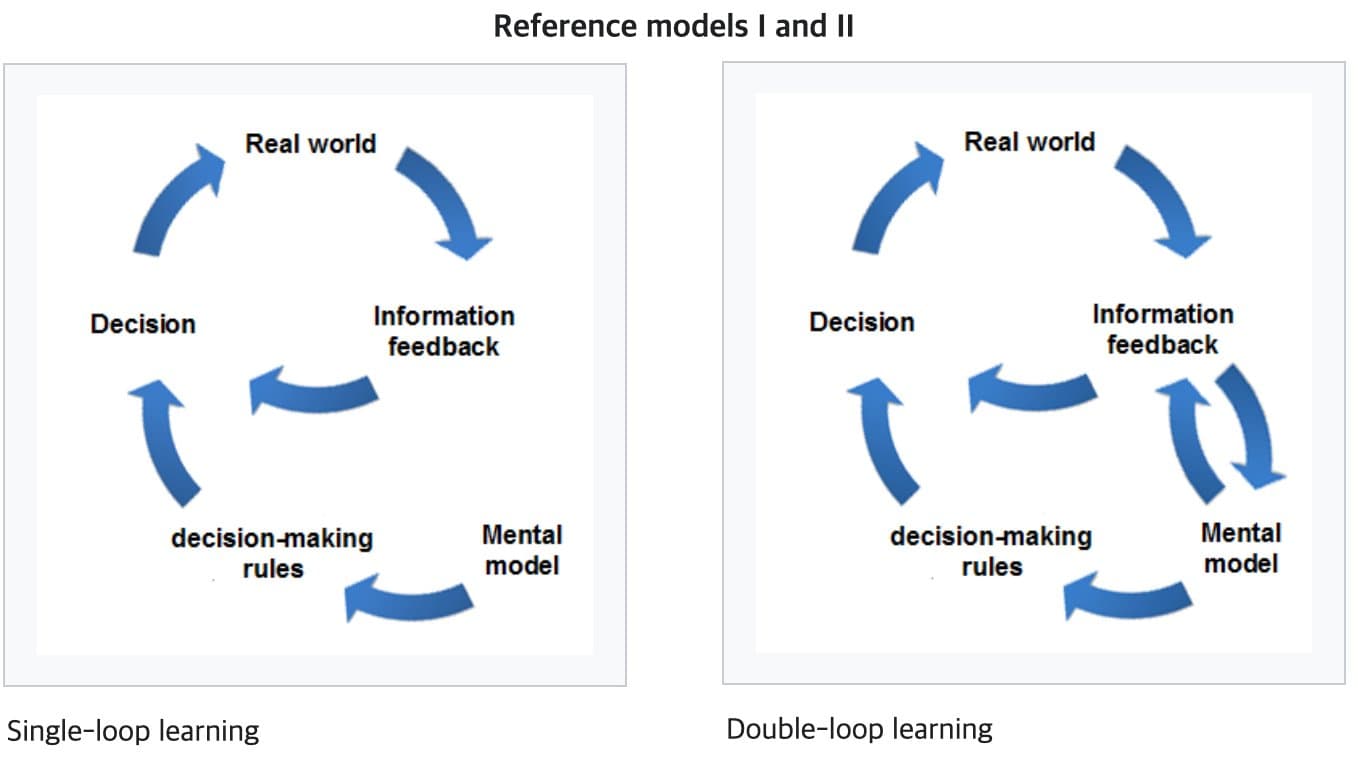
Of Google's countless projects, only about 50% succeed. The company even runs a unique space called 'The Google Cemetery' that displays tombstones of discontinued services. Google dissects these failures like autopsying a body, identifying direct and indirect causes of problems, documenting them precisely, and establishing countermeasures.

Open innovation is a paradigm where companies must intentionally bring in external ideas and technologies, share internal assets with the outside world, and create value to survive and grow. In other words, it's about breaking down organizational boundaries and increasing the probability of innovation through active external engagement—clearly demonstrating why 'absorptive capacity' is a core competitive advantage for modern startups.
When we hear the phrase 'global expansion,' we usually picture a one-way arrow—starting from Korea and extending outward to bigger markets. But Park Si-jin's map looks different. She started in Korea, spent seven years in Japan, returned to Korea with startup experience and a diverse career, and then headed back to Japan. It's not a straight line, but rather a large circle.
A person who calls herself a 'business consultant armed with entrepreneurship.' Someone who gets more excited when others' businesses succeed than her own. This interview follows why she took such a long detour and what she learned along the way. Perhaps the fastest path isn't always a straight line.
Interview Navigation
1. Business Artist and Getting Started in Japan
2. The Mission of Entrepreneurship and the First Failure
3. When the Market Calls, Delivering Is BD's Job
4. Advice for Korean Companies Dreaming of Japan Market Entry
5. The Goal to Help Generate KRW 100 Billion
Q. You've probably had to introduce yourself countless times. How do you describe yourself?
About ten years ago, I called myself a 'business artist.' Business planning is, in a way, about continuously drawing something out. You can't just cut it into neat pieces. You do this and that, sometimes dwelling in the realm of imagination, other times matching financial figures. That's why I kept doing new things.
People say business is rigid and numerical, while art is fluid and emotional. But when you're in planning, you need both. You have to constantly move up and down, left and right. You can't think about just one thing—your thinking must always be open, and yet you're always lacking. That's why I had this strong desire to know everything comprehensively. So I thought, why not become someone who approaches business like art? That's how I came up with the name.
Then, after about 20 years in my career, I recently redefined myself, and now I more clearly describe myself as 'a business consultant full of entrepreneurial spirit.'
Q. It took 20 years to introduce yourself with such clarity. I'm really curious about the beginning of that journey. How did your first career start?
I started my professional life in Japan, and my first job was in planning. Planning sounds pretty cool, right? I started with event marketing and promotional marketing. Then I moved into business planning, but I realized I needed to understand numbers. So I went to graduate school to study numbers and majored in business administration. When I came back, they gave me work like IR planning, and from business planning I eventually moved all the way to corporate strategy. I experienced all of that at one company.
Q. Was there a clear reason why you started in Japan?
I actually never thought about working in Japan. It happened completely by chance. After graduating from college, I wanted to study in the US for about a year and had even gotten my visa. Around that time, my cousin had started his own company for his alternative military service and asked me to help out before I left for the US, to earn some pocket money.
While I was helping him, he said he had a good contact in Japan and set up a bridge for me to meet them. We kept in touch after that, and this person later became independent and started their own company. When that company was about three years old, they made me an offer. Through our correspondence, I'd developed a good impression of both this person and Japan, and I thought Japan would offer more learning opportunities than Korea, so I decided to give it a try.

Q. You ended up staying in Japan for a full seven years after going there by chance. Did you stay at the same company the whole time without changing jobs?
I think it was possible because it was a small-to-medium-sized company. It was one company, but I got to experience a really diverse range of roles. If it had been a large corporation, it would have been hard to experience so much. And it suited my personality well. But I did feel a certain thirst—a feeling that I wasn't learning enough. When I looked at my friends, they were getting lots of training and seemed to have good systems, but we didn't have much of a system. I had to figure everything out on my own by trial and error.
Q. Was that thirst also why you left?
No, that thirst made me decide to go to graduate school. I also felt it was too early to quit. I needed to complete at least one term, and leaving after three years seemed too soon. As I was thinking about how to hold out, I thought I'd create a more challenging environment outside work, so I went to grad school. When I got stimulation there, strangely enough, I started getting more important work at the company too.
Q. That graduate school became the catalyst for your startup.
The place I went to was a business school in Japan that a lot of working professionals attend. Traditionally, Waseda and Keio business schools are famous, but this wasn't one of those—it was an emerging school. But the dean was globally very famous. He'd risen through rapid promotion at a major Japanese conglomerate, then became independent and started a venture capital firm. After building his reputation, he established this business school. He put out the catchphrase of creating 'the Harvard of Asia' and was a star-level CEO featured in Forbes Japan.
Fame doesn't directly translate to a school's success, right? But this person essentially sold to all 3,000 publicly listed companies in Japan, recruiting mid-level managers as certificate students and then converting them into full-time students—his marketing was really brilliant. Now the alumni network has grown to 7,000 people spanning the Japanese business world. If Waseda and Keio are academic, this one established itself completely as a business school.

When I entered, it was only in its third year and wasn't famous. That was actually my strategic choice. Waseda and Keio had exams where you had to write a two- or three-page essay in Chinese characters within an hour, but my Japanese wasn't good enough for that. Plus, there were a lot of Koreans there. But this school only had Japanese students at the time. So I thought, as one Asian applicant, I could somehow make them choose me. I pulled in everyone around me to review my application and give me interview training, and somehow got in. Fortunately, the strategy worked.
Once inside, the dean kept pushing the idea that 'you must start a business.' I went there to get better at my company work, to learn finance or develop a management mindset, and here he is telling me to start a business. So I kept learning about entrepreneurship, and by the time I graduated, I'd reached a clear conclusion. It's not that ability separates those who can start businesses from those who can't—starting a business is something anyone living in this era must try at least once. For people who want to grow, entrepreneurship is the greatest tool for self-development. There was also a sense of urgency that it would only get harder as I got older.

Q. You went there to get better at your job, but it ended up being the clear trigger for starting your own business.
Exactly. At the time, our CEO was the typical salesman type, so I'd only seen that kind of leader. I thought someone with my personality would struggle with entrepreneurship. But the dean was completely different. I realized, 'Oh, that kind of leadership exists too. Leadership doesn't have to be just one style. I can find my own leadership style.' That's how I came to think about it. Being at one company for a long time, I hadn't seen many different cases of leadership, so the dean became a great catalyst for me.
I'd actually been thinking about starting a business even before that. I got the idea strongly while working at my cousin's company. That was right after the IMF crisis and the dot-com bubble burst, around when I was graduating college. The equation 'employment equals stability' didn't exist in my head. I felt that someday the era would come when people would have to step out from under the umbrella and create their own weapons, and if I tried to come out then, it'd be too late. My family was conservative, so my father wanted me to take the stable path, but when I went to my cousin's company, I realized the world I'd been living in was too narrow. All my cousin's friends around him had started businesses. A world where starting a business was completely natural. Not starting a business felt more like an opportunity cost.
Q. You worked there for seven years before finally coming to Korea to start your business, so you must have had a lot of concerns. Including whether to start in Japan or Korea.
Japan was an 'all or nothing' conclusion. Either become completely Japanese, or get out quickly. Staying in between would make things difficult even after coming to Korea. Japanese people don't have that strong sense of 'we must grow fast, we must take risks quickly' like we do. It's a place where many people gather with the mindset of maintaining the status quo, 'now is good,' 'let's do a bit better here.' So when I'm hungry and walking fast, people look at me strangely and don't follow well. Like 'do we really have to go that far?'
Living in that society, I thought it would be natural to stagnate. When I'd briefly come to Korea to see family, people were charging around. Just the fact that I found that unfamiliar showed me I'd already adapted to Japanese society, that the pace was different. Even if not a wild horse, I wanted to be someone for whom running when I want to run isn't strange. Realistically, putting down roots completely in one society is really difficult. Just like how when a foreigner comes to Korea, no matter how hard they work, good opportunities naturally go to Koreans first. So both physiologically and strategically, I judged Korea would be better. That was in 2013.

Q. So SJ Company now isn't your first company?
Right. Back then I created a company called 'The Dream' and did platform business. You can think of it as crowdfunding. I'd handled a platform business at my previous company, but since I did it with full company support, I didn't know how difficult it was. So I hired developers and designers, brought on advisors, and started. As my first business, I couldn't help but be overly tense. I learned by doing all kinds of really stupid things.
When I calculated it all out my own way, I thought 'this isn't the business for me,' so I closed the platform business in 2015. The Dream itself pivoted once and continued until late 2016, then shut down in December. I had a mentor who asked me why I started the business when I was struggling. My goal for starting was to be a catalyst, helping people with their own projects achieve them. That's crowdfunding business, right?
But my mentor said, 'You don't necessarily have to do that as a business. You can do consulting, and since business planning is your specialty, wouldn't it be better to pivot quickly that way, build your capabilities and make money, then do that business later with a service mindset?' He told me straight to stop. At the time, my pride was hurt so I didn't see that mentor for a year. (laughs) My ego was strong. Later I went back and said 'Thanks to you, I'm so much more comfortable, thank you.'

Q. After closing your first startup, did you go back to a company?
After 2016, I had an opportunity to participate in managing a Korean entity created by a Japanese company. I took a director position there and stayed about seven years. Before joining that company, from 2016 to 2018, for about two years I tried various things for my next step. I taught as a professor at university, and for about six months I worked as a manager at Seoul Innovation Center doing startup incubation.
Q. You really don't rest. You could have taken time to recharge.
While starting my business, my mind was struggling a lot, but my body wasn't tired. My head kept turning but I had much more physical time than when I was working at a company. So I tried various things during that time.

Q. Those seven years as a director and executive must have been different from your previous company life.
I did management, did initial setup, and there were situations where I had to jump into hands-on work myself. When creating new businesses and achieving early KPIs, I did a lot of the setup like gathering initial customers and making SNS explode. It was a Japanese real estate company specializing in foreigners. At first it was business caring for Koreans going to Japan, but as Korea also became a country receiving 2 million foreigners, I worked on settling and launching the business model we were doing in Japan directly in Korea.
Q. It seems like it was a business where your various experiences could synergize. After spending seven years like that, was there a decisive trigger that made you choose to start another business?
The decisive trigger was COVID. In 2022, the company nearly stopped completely. But even in that state, the Japanese headquarters CEO didn't let anyone go. Even with personnel costs continuing. I had this strange sense of responsibility, like 'I can't be doing less than one person's worth.' As a director receiving that amount, I felt too sorry. So I cut my days in half. 'I'll make money elsewhere, so let's cut company expenses for now. Let's bring in hands-on workers and I'll step back.' The direct trigger for leaving after that was when the Japanese headquarters prepared for going public and replaced all management with Japanese people. It became a good opportunity to wrap things up nicely.
I didn't leave to start a company, but around that time outside work increased. Having learned from my first startup, I had a principle not to do a full-scale startup until conditions were ready. But then I saw the Japan trend really picking up. I guess people have timing. My Japanese network started doing business with Korea one by one, and inquiries like 'introduce me to this kind of person' became frequent. Then my mentor asked me to handle sending people to an IR program in Japan, and Japan after so long felt so good. So around December 2025 I became completely focused on this direction.

Q. Consulting, in a way, is about advising and sharing experience as a third party—you don't actually execute. Don't you find that frustrating, or worry you're just talking without doing?
That's the biggest blind spot in consulting. Even when I was doing business planning inside an organization, I felt that thirst. But my stance is: if the market needs it, I do it. If planning is needed, I provide planning. If a startup says "Please execute too," I execute. It's never "I only do planning, someone else can execute." Execution requires strategy, so I do that part together—planning and execution go hand in hand. Strategic planning is my stronger domain, and pulling that out is like a cheat code for me. Everyone has their special skill, right?
That said, I'm not a marketing expert. If you compare me to marketer A, A is obviously much better. But on top of strategic consulting, I can at least handle the parts I need to do. For Japan-side work, my role is often bridging. Rather than doing everything as a specialist, I can test whether customer needs exist—you don't have to be an expert for that. Once needs are found, I hand it off to the team that can do it best.
Q. You've met many people entering Japan from Korea and Korea from Japan. These days everyone thinks of Japan when they hear global. Are there common pain points both sides run into, mistakes everyone repeats?
Definitely. Both Korean and Japanese companies have their own pride. Korean companies entering Japan often come with success stories—large corporations or high-growth startups. They go thinking, "Our stuff is amazing, is there a team amazing enough to handle it?" On the flip side, when you ask the Japan team, they say, "Will this even work in the Japanese market?" Korea assumes it'll work for sure; Japan thinks it doesn't meet Japanese standards.
To break that, you need to 'humble yourself,' 'do everything perfectly on your own,' or have an intermediary who understands both sides. The most important thing is that communication doesn't end in one round. It keeps happening. And then egos come out again—'I'm me, you're you.' You have to keep playing that role and keep creating opportunities to meet. If you look at success cases, they're companies that achieved big success in Korea with large capital, then acquired a Japanese company or set up a separate company in Japan with a Japanese team that leads the business. LINE and Musinsa did that.
Q. People say Japan takes especially long among global markets. I've heard it's because Japanese consumers rarely switch brands once they start using one.
When a Japanese company first sees our product, the first question is which company bought it. In other words, breaking through that first reference takes time. The same goes for consumers. Once you break through, it lasts long, right? If I keep using the same pen, I don't look for others. The Japanese market is very conservative with its own boundaries. There's pride in that market. Breaking through that market, plus finding our way in the Korean market is already hard—finding your way in a totally unknown market is that much harder. So I always tell people to expect at least 2–3 years.

Q. Still, the reason we're looking at Japan again is K-culture. Do you feel things have changed compared to before?
It's not so much speed, but the layer has changed. In the past, the people who liked Korea were really women in their 50s. They watched 〈Winter Sonata〉. If you went to Shin-Okubo, the Korean town, that crowd was eating samgyetang. Now if you go, there are so many teens and twenties. It's dramatically different. But you have to see it this way too: if the entire Japanese market is 100, that K-fan layer is a small portion. There's still a gap. But once it breaks through, it could grow like clothes getting soaked in drizzle—that's the expectation. I don't think the whole market has changed yet.
Q. So you have to see it as a market where you need the stamina and budget to keep trying for at least 2–3 years before deciding whether to challenge it.
The smartest move is to start studying 2–3 years before entering, without big investment. I think you have to be cautious even about setting up a legal entity. I believe you have to approach the Japanese market with the humble attitude that you'll fully understand the culture. As humbly as when going to Southeast Asia or the US. But I don't think we go to Japan as humbly as we go to the US. It's a market that requires big investment, but I think the return is there.
Q. After much trial and error, Japan became important to your business. Is there anything you're focusing on this year to concentrate on this work?
I set a goal. It's a 10-year goal: cash generation. A startup's biggest challenge is creating cash. So my goal is 'to help clients I meet generate a cumulative KRW 100 billion in cash flow over the next 10 years.'
This year, I'll meet just two clients who have that potential. Two clients who can move into long-term contracts. Meeting those people is this year's goal, and I'll keep studying the Japanese market with humility.
Q. Your decision-making seems to have a consistent standard. You started by helping your cousin, you worked to achieve the owner's goals at companies, your business was crowdfunding to help others, and now your goal isn't 'I make KRW 100 billion' but 'I help others make KRW 100 billion.'
Now that you mention it, I guess so. The fulfillment and achievement I get from helping someone is the greatest. When I do that, I do my best too. When others do well, I do well, and that truly makes me happy. Doing well alone is honestly lonely and isolating. Lonely is okay, but isolated is a bit much. When we do well together, it keeps growing.
Q. Do you have your own criteria or conditions for choosing those two clients?
First, the client has to be ready. Mindset and budget have to be ready. I'm absolutely not saying this from a 'looking down from above' perspective. Founders are truly outstanding. But if they come unprepared, even what they were doing well falls apart. So I look at revenue, profit, personnel—everything. And most importantly, understanding Japan—the CEO really has to know Japan well and have affection for it to succeed. That way they keep studying the market and don't just pull out when things don't go well, but find a way to make it work. Without that, they face a barrier and before even sprouting, they hastily judge 'Japan doesn't fit us' and leave.
The most important thing is that there must be needs in the Japanese market. That's the most critical. If there are needs, and they still want to enter, that's when it really begins. If I can be there for that great beginning and end, nothing would make me happier.
After hearing the full story of CEO Park Si-jin, that first loop starts to look different.
From Japan to Korea, from startup to failure, to corporate life, and back to Japan again. What looks like a long detour turns out to have been driven by one consistent intent all along. The first instinct to help her cousin, the commitment to achieve her company owner's goals, the crowdfunding work to catalyze other people's projects into the world, and now her current mission to help someone earn KRW 100 billion through her—she has always been someone who thrives by helping others succeed.
Even her first startup, which she calls her biggest failure, and the painful experiences in corporate life were not dead ends but detours that led her to where she is now. Her advice—that you must approach the Japanese market with humility and the resolve to endure—may be less about the market itself and more about the attitude she herself learned by moving through a society and an industry with her whole being.
The fastest route is not always a straight line. Only those who take the long way around can draw the full map. CEO Park Si-jin now holds that map and is heading back into the market she knows best.
Edit & Writing: Lee Hye-mi gbd.hyemi@gmail.com