BD Insights
Loading...

BD NOTE
가*

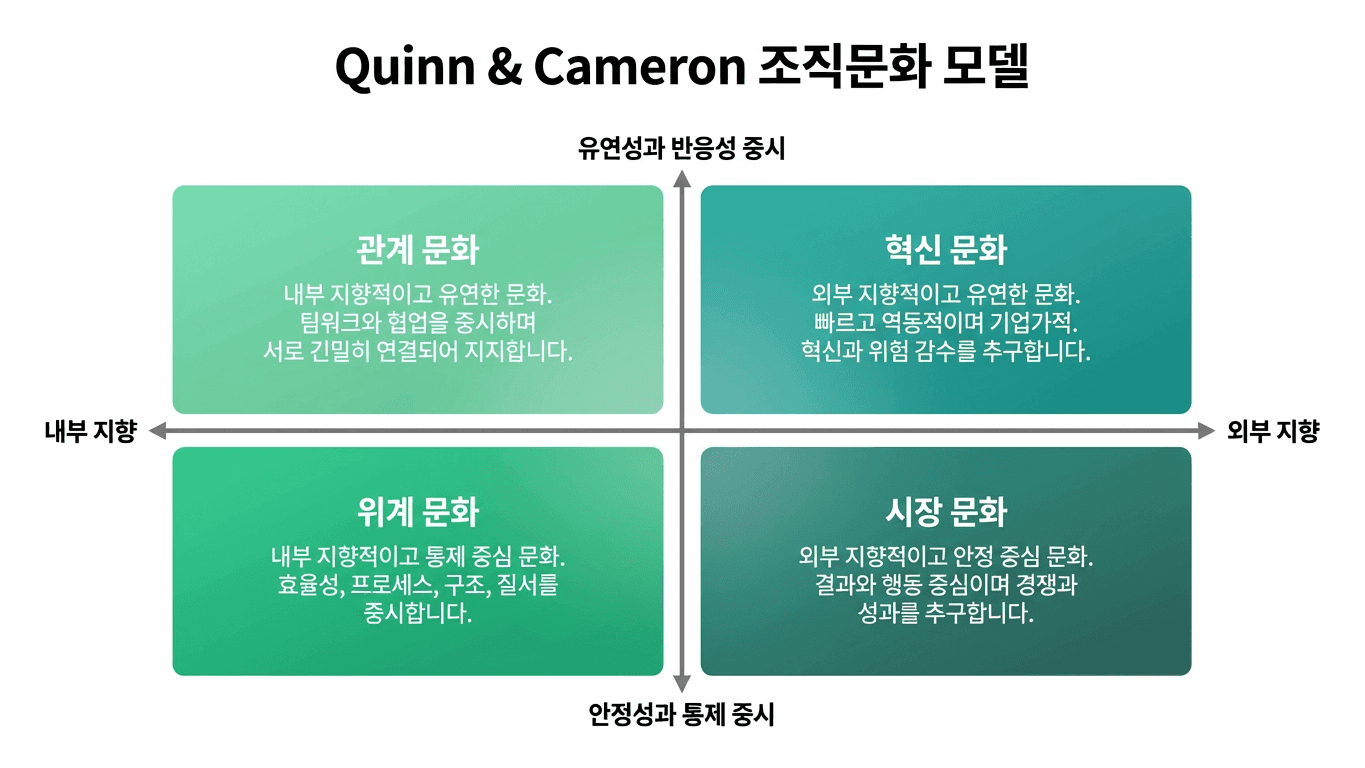
Assembling top individuals doesn't make a team. This article outlines how to design a small but solid team using three principles—role design, execution autonomy, and communication structure—along with the Quinn and Cameron organizational growth model.
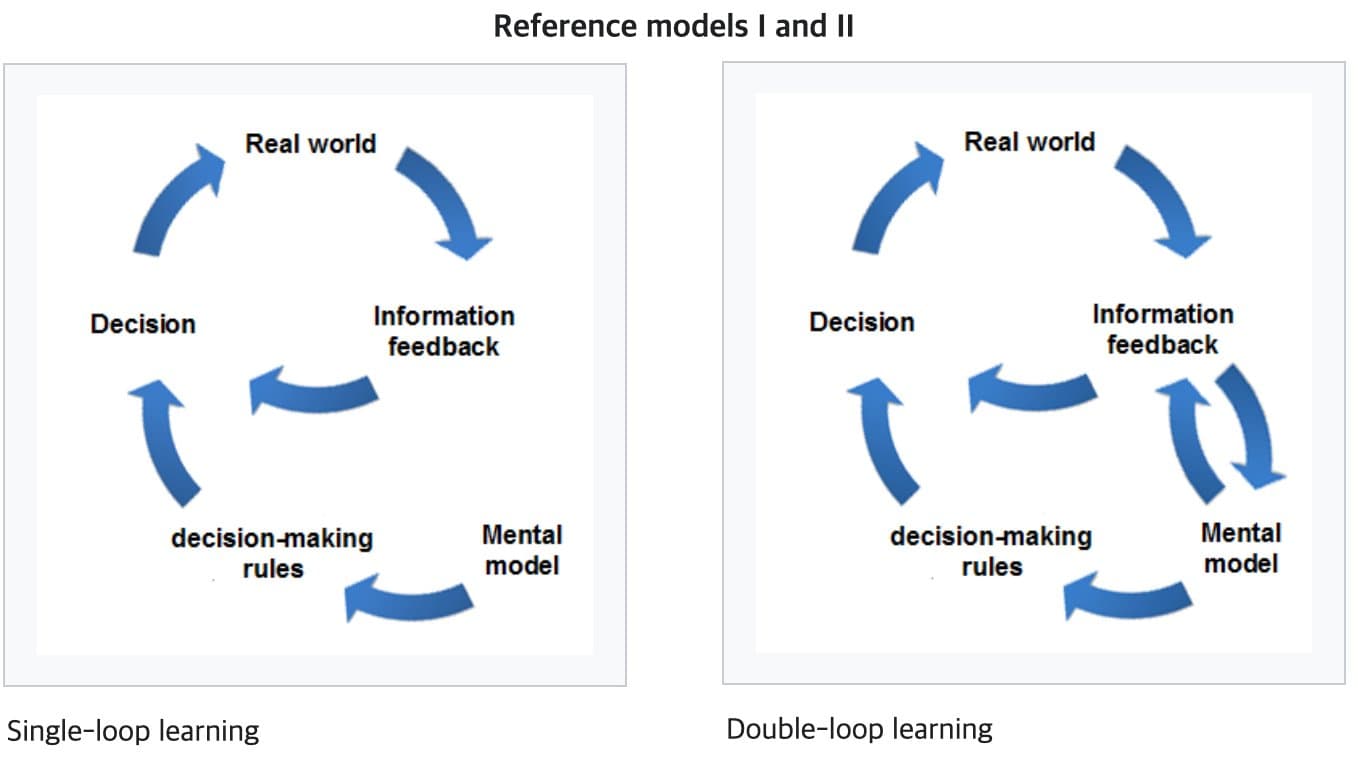
Of Google's countless projects, only about 50% succeed. The company even runs a unique space called 'The Google Cemetery' that displays tombstones of discontinued services. Google dissects these failures like autopsying a body, identifying direct and indirect causes of problems, documenting them precisely, and establishing countermeasures.

Open innovation is a paradigm where companies must intentionally bring in external ideas and technologies, share internal assets with the outside world, and create value to survive and grow. In other words, it's about breaking down organizational boundaries and increasing the probability of innovation through active external engagement—clearly demonstrating why 'absorptive capacity' is a core competitive advantage for modern startups.
Starting a business and joining a company. We often think of these as opposite paths. Entrepreneurs gain freedom but take on risk, while employees choose stability but give up some freedom. Yet Lee Tae-hyung (BD professional) chose neither—or both. Why would a founder who successfully exited his company go back to working for one? And why does he still keep running businesses on the side? Is he an entrepreneur or an employee today?
This interview follows the journey of someone for whom the boundary between business and employment has blurred.
Interview Navigation
1. The founder's instinct revealed in part-time jobs
2. Why I chose employment without stopping my business
3. The principles of a BD professional who hits the ground
4. A new challenge in India and the final dream
Q. You're doing a lot of things at once, Tae-hyung. I'm curious how you introduce yourself. Could you give us a brief self-introduction?
I introduce myself as someone who has decision-making authority in whatever I do. Right now, I lead the Global Division at UD Impact, an entrepreneurship education company. I'm responsible for a variety of projects creating entirely new markets for 'entrepreneurship education' in places like Japan, Indonesia, and India. The Global Division was established last year, and we've achieved meaningful results in just one year. Japan and Indonesia are settling in, having secured projects with governments and large corporations. Among them, I'm most focused on India.

Q. It's interesting that you don't introduce yourself by a specific skill but as 'someone who makes decisions.' Come to think of it, your career began with entrepreneurship, so you've been making decisions the longest. Your first career was starting a business, not joining a company. Was there a specific reason you decided to start with business?
There wasn't one clear reason. But my father's influence was the biggest factor. My father worked at one company for almost 40 years. He started as an entry-level employee and last year became the CEO of Pulmuone. He's the person I respect most, and even now, he's the one I turn to most for business advice. But when I was young, I felt differently. Watching him, I thought things like 'Doesn't it take too long to improve your situation on an employee's salary?' and 'Couldn't I go faster?'—thoughts that seem naive in hindsight.
From my school days, I thought I was quick-minded and good at seizing opportunities. My major was physical education, and I worked part-time teaching youth sports. But I wanted to earn more than the part-time wage. So I made proposals directly to the center owner: 'Let me teach in English so we can raise prices and create a premium class.' 'Let's offer fitness classes to the mothers who drop off their kids.' I kept thinking up ways to generate more revenue with the same time, without anyone telling me to.
Same with English tutoring. I couldn't earn what I wanted teaching one student at a time, so I bought ad space in a local newspaper, promoted group tutoring, and eventually ran it almost like a private academy. Back then, I didn't know that was entrepreneurship. Looking back, I was always approaching things like a founder.

I think leadership was also somewhat innate. My favorite anime was One Piece. The journey of sailing together toward a dream made my heart race. In the military, I served as an officer. During that time, my friends got jobs a year or two ahead of me, and they all hated their workplaces. They dreaded going to work every day and found no joy in it. Watching them, I thought, 'Corporate life isn't the life I dream of.' So without much hesitation, I chose entrepreneurship.
Q. Hearing you talk, it feels like you were born an entrepreneur. That makes me even more curious about your first business. You exited that one, right?
I spent my school years abroad, so I had many foreign friends. Even after graduating and returning to Korea, I naturally had lots of opportunities to meet friends visiting Korea and foreigners living here. K-culture is well-known now, but back then, people only knew Seoul's main tourist spots and didn't know about or think to visit other regions. Korea has diverse culture and attractions in every local area, and I thought, what if we connected people to that?
So I launched a local tourism platform for Korea, similar to today's Airbnb Experiences. At a time when such opportunities didn't exist, it went viral among foreigners, and by securing stable traffic, we achieved meaningful results and exited just three years after launch.


Q. You achieved results quickly on your first startup. Someone like you would probably start another business after exiting, but surprisingly, you joined a company. There must have been a reason.
I did join a company, but I never stopped doing business. I continued running businesses alongside my job. I even deliberately looked for companies where that was possible. So I've never once taken a break from business. I worked hard at the company during work hours, and after work, I spent at least a little time every day on my own business. For me, business isn't stress—it's fun. When someone throws out an idea about a business they want to do, I think it over with them, share my thoughts, help where I can, and business naturally continues.
Q. If that's the case, wouldn't it be better not to go to a company and just spend that time doing more business?
After starting a business, I found it harder to grow on my own than I expected. To grow, you need to build expertise or get external stimulus, but the work you do as a CEO tends to be repetitive, and focusing on just one business left me feeling stuck in place. Meanwhile, my friends working at companies seemed to struggle and get scolded every day as juniors, but over time, they had broader experience and much deeper market understanding than I did.
The process of having a mentor help you as a junior, having your perspective expand, and growing step by step—I felt like I'd missed that learning period by starting my business too early. I talked over this concern with my father. He told me that a colleague of his had left the company and joined a startup called Jiguin Company, and suggested I get advice from him. That person was kind enough to invite me to come learn the work, so that's where I started my first job.

But I didn't know what role to pursue. I'd built a platform and raised investment, but I wasn't ready to jump straight into strategy or investor relations. I decided to start over with sales and joined the sales team. When I was running my startup, I'd gone out and sold my own product, so I figured I could do something.
Q. Did working at a company turn out to be a learning experience as you expected?
Selling on my own and working in a sales team were completely different. Beyond just selling, I learned how to manage a sales funnel, how to execute the next cold action, how to track revenue, and why baseline revenue matters most. I learned the fundamentals of being a salesman from scratch and built real skills.
Looking back, though, I wasn't just doing sales—I was doing business development the whole time. Without anyone asking, I'd propose moving from offline to online, and if I thought we could create a new market with a product, I'd take the initiative to sell on Amazon US or run crowdfunding campaigns on Indiegogo or Kickstarter. I was always thinking about how the company could scale up.
Building on the many valuable lessons from that first company, I moved on to experience various roles, and to this day I've been doing both corporate work and entrepreneurial ventures.
Q. From startups to domestic sales to global new business. It seems you've been doing BD nonstop. How do you define business development? Is BD as an entrepreneur different from BD as an employee?
At first, I thought business development was only for founders. Planning the business you'll run, finding the value you want to create, validating whether it actually works—these are things only a founder can do. So when I was an entrepreneur, I didn't really understand how BD could be a separate job function.
But once I joined a company, my thinking changed. As a company grows, the CEO has more to do, and the difficulty and stages of that work evolve. Opportunities multiply, but you don't know which will succeed, and if you don't act, you fall behind. You absolutely need someone to keep discovering those opportunities. I genuinely enjoy that work and want to excel at it, so I realized that being able to do it inside a company—without having to start my own—was actually a great opportunity.

Q. What do you think is an essential competency for a BD professional? Do you have any DO & DON'T rules—things you always do or never do in business development?
I almost never do desk research. These days, AI does it better anyway. Instead of spending time on research, I go out and meet someone who knows the market. I believe BD professionals need to be light on their feet. Information from people is much faster and more accurate than data. If a market is already documented in reports, it's already one step behind.
Whenever I had to solve a new problem, I always tried to meet someone related to that problem first. Whether they were actively solving it, had observed it from the sidelines, or had already failed at it didn't matter. Thirty minutes with someone who's been there beats three days of digging through documents at your desk.
Of course, no one will meet you if it's only for your benefit. So before I go, I always sketch out a win-win scenario. If I don't have a clear sense of what I can offer the other person and what this meeting means to them, the meeting won't happen. No matter how much I want to meet them, if I can't offer value, the meeting won't materialize.
Q. You're doing business in India now, and I heard this market is new to you. Are you still meeting a lot of people?
India has really driven home how critical it is to meet people with experience. I especially want to meet people who've spent time in Tier 2 and Tier 3 cities. During my last trip, I made several misjudgments out of complacency, thinking 'people live there, it can't be that dangerous.' It wasn't a question of business viability—it was about safety, and I could have put my team members in real danger. Looking back, it was truly reckless.
No matter how much research you do in Korea, you can't judge the line between danger and safety. That's something only someone who's actually been there can tell you. How far you can safely go, what behaviors to avoid in Indian business—there are definitely areas that no manual can capture.
Going through this made me realize that global is another domain of business development altogether. I didn't start out as a global expert—I'm continuously working to build that expertise. The Korean network is comfortable, but I deliberately avoid relying on it and try to keep meeting with local people. That's why.
Q. Just hearing about it, this sounds like a very challenging year for you. What do you hope to achieve this year, both professionally and personally?
First, I want to accomplish all the goals UD Impact has set. For an employee, I think that's the primary vision and mission. And as a leader, my role is to interpret those goals well, turn them into momentum for the team, and move forward together.

More specifically, I want to train over 20,000 entrepreneurs in India and generate over KRW 1 billion in revenue from India alone. Right now, 100% of our revenue comes from clients in Korea that I communicate with directly, and I want to reduce that to less than half and expand the role of my team members. I want sales to happen organically within India, so the India entity runs on its own. Now that I'm saying it out loud, I have a lot to do.
Q. Apart from employee Taehyeong Lee, do you have a separate dream or goal as entrepreneur Taehyeong Lee?
This might sound odd, but my dream is to see our national team win the World Cup before I die. My dream was actually to be a soccer player. I played abroad but came back to Korea because of an injury.

I can't play anymore, but as a businessperson I want to contribute to the soccer industry. Someday, when we win the World Cup, I hope the logo on the players' jerseys is from a company I've been involved with. If I'm connected to about 100 companies starting now, won't one of them hit? (laughs)
'A person who makes decisions.' That's the first sentence Lee Tae-hyung used to introduce himself as a BD professional. At first, it sounded like a kind of pride that refused to be defined by a job title. But after hearing his entire story, I now understand that this single line is the most accurate description of how he lives his life.
The decision to turn his private English tutoring into group lessons during his school years. The decision to start a business instead of joining a company after military service. The decision to take a corporate job instead of launching another business after exiting his first venture. The decision to never let go of entrepreneurship even while working a full-time job. The reason he can be both an employee and an entrepreneur—and an entrepreneur while being an employee—is ultimately because he has lived as 'the person who decides' in both roles. Job titles probably don't matter much to him. No matter where he stands, he's someone who places himself in positions where he carries the weight of decisions.
As I finished this interview, I thought that the next generation of BD professionals might increasingly resemble him. In an era where the boundaries between business and employment are blurring, and it's becoming more natural for one person to hold multiple identities at once, what BD professionals need most may not be job expertise first—but the habit of placing themselves in the seat of decision-making.
Edited and written by: Lee Hye-mi gbd.hyemi@gmail.com