Numbers are just results—context reveals the cause
5 min read
Related articles
BD Insights
How to Build a Small but Strong Team
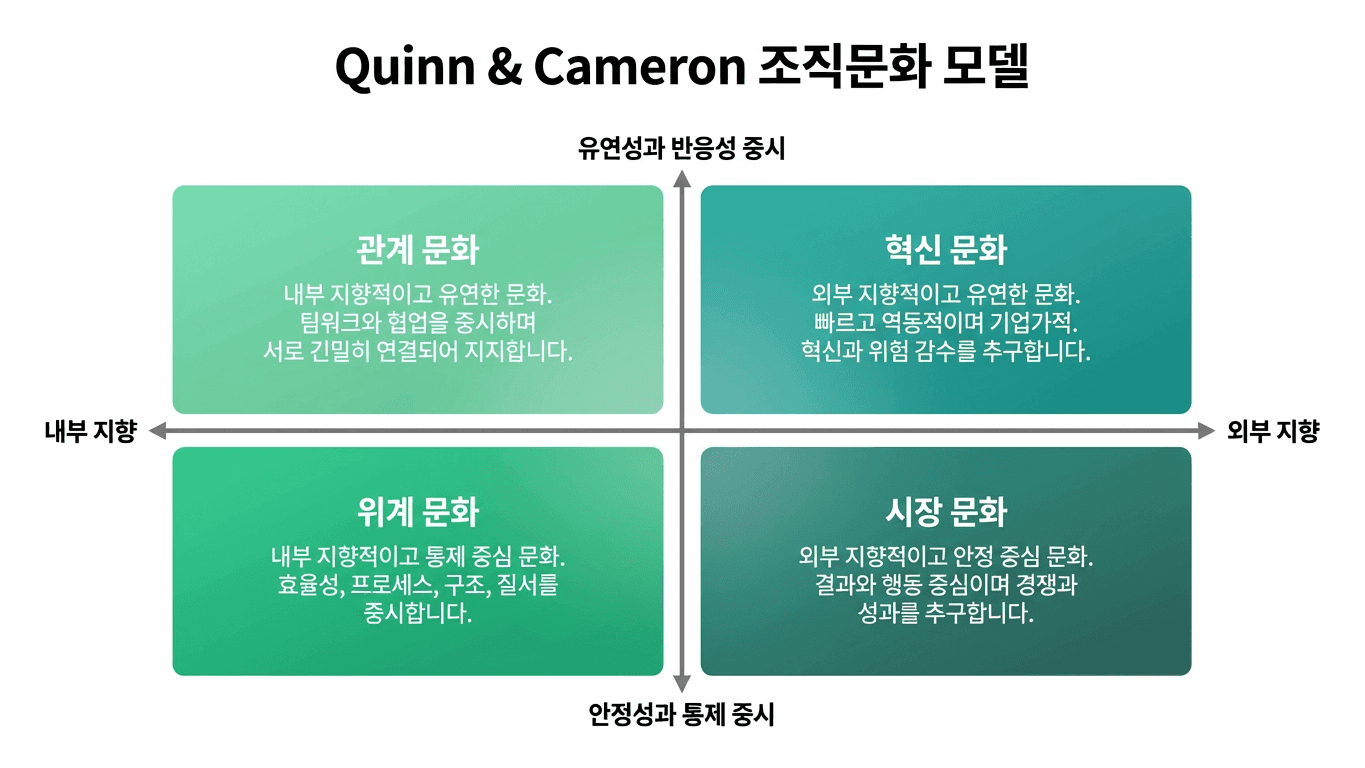
Assembling top individuals doesn't make a team. This article outlines how to design a small but solid team using three principles—role design, execution autonomy, and communication structure—along with the Quinn and Cameron organizational growth model.
Aug 31, 2026
4 min read
BD Insights
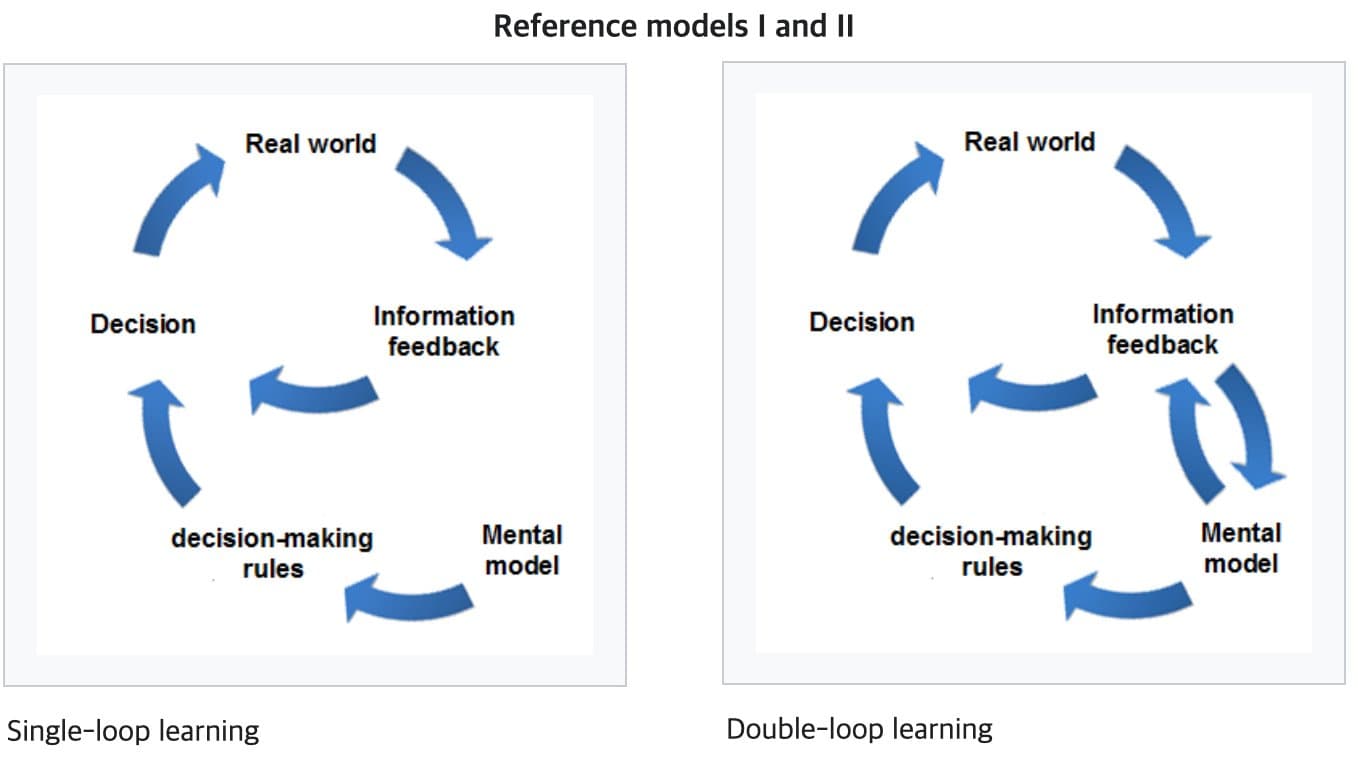
Fleet Learning: How to Turn Problem-Solving Into Organizational Capability
Of Google's countless projects, only about 50% succeed. The company even runs a unique space called 'The Google Cemetery' that displays tombstones of discontinued services. Google dissects these failures like autopsying a body, identifying direct and indirect causes of problems, documenting them precisely, and establishing countermeasures.
Aug 21, 20266 min read
BD Insights
Turning Opportunities into Organizational Capabilities
Open innovation is a paradigm where companies must intentionally bring in external ideas and technologies, share internal assets with the outside world, and create value to survive and grow. In other words, it's about breaking down organizational boundaries and increasing the probability of innovation through active external engagement—clearly demonstrating why 'absorptive capacity' is a core competitive advantage for modern startups.
CODEX 9. Without checking your growth plates, your growth stops: Market research for expansion
There's no guarantee that a success formula that worked in the early market will work in the mainstream market. Through the Notion case study and chasm theory, we've outlined a market research framework for diagnosing growth stagnation and expanding into adjacent markets.
What you need in the growth phase is diagnosis, not boasting
A startup that's achieved its first success in the early market is like a child just past infancy entering a growth phase. Many founders become obsessed with revenue and subscriber counts during this period, measuring daily like checking a child's height. They feel relieved saying, "We grew this much compared to last month!"
But seasoned investors and executives don't fixate on today's numbers. They diagnose whether invisible growth potential still remains and whether core growth drivers are functioning properly. They distinguish whether current growth is based on healthy fundamentals or temporary inflation.
Market research for expansion is precisely this diagnostic process. It's not about confirming today's metrics, but assessing whether there's room for tomorrow's growth.
Success formulas have expiration dates
Early market success creates a proven formula. But that formula doesn't work forever. When growth stagnates, market research must answer one question.
"Is this temporary stagnation or a saturation signal from the current market?"
If it's temporary stagnation, there are still unsolved problems within your existing customer base (SOM), or your product's value hasn't been fully communicated. You need to dig deeper into the current market before expanding. If it's a saturation signal, you can't expect meaningful growth in the current market anymore. It's time to find and expand into adjacent markets (Next SOM).
Without distinguishing between these two, you'll either abandon markets with remaining opportunities or waste resources on markets that have already hit their ceiling.
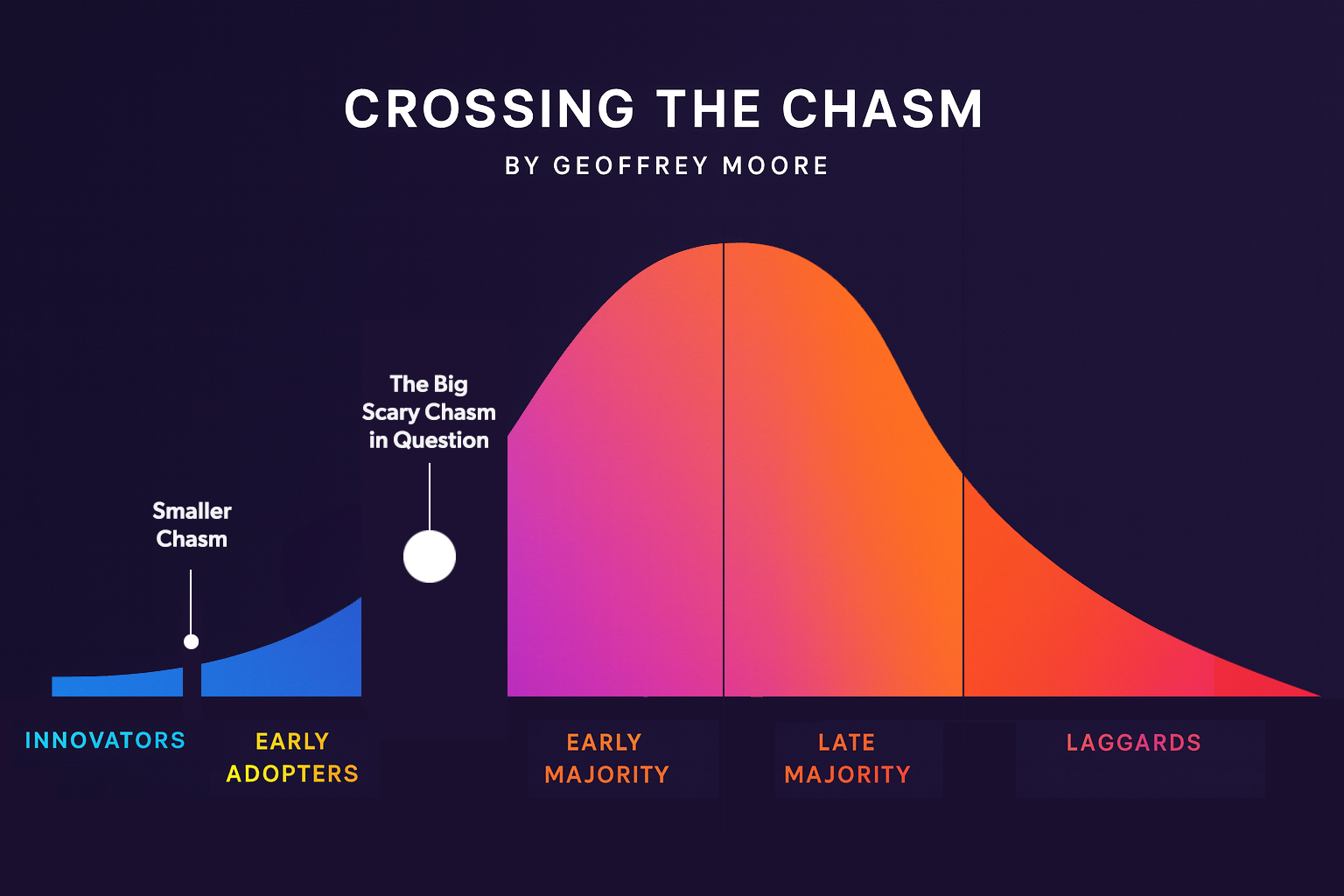
Chasm: The gap between early market and mainstream market
@GritBD
Why do startups that grew rapidly early on suddenly seem to stop at some point?
Management strategist Geoffrey Moore explains this through 'Chasm' theory. The chasm is a deep and dangerous gap between the small early market of Early Adopters who embrace new technology and the massive mainstream market of Early Majority who prioritize practicality.
Early customers find value in novelty itself, even if imperfect. But mainstream customers are different. They demand proven stability, clear ROI, and minimized adoption risk. The response "This is innovative" versus "Will this really work in our organization?" represents completely different market languages, even for the same product.
Therefore, market research for expansion is the process of designing a bridge to cross this chasm. You must diagnose in advance what the mainstream customers you'll encounter—not the early customers who created your success—want and what they fear. Expanding blindly without this diagnosis is the most common cause of stagnation.
Numbers are just results—context reveals the cause
"Conversion rate dropped 2%." This number is a symptom. Not a cause.
The real cause lies in context—your customers' lives and environments—such as a competitor's new feature launch, shifting needs of core customer segments, or market phase transitions. Confirming 'what happened' with quantitative data and understanding 'why it happened' through qualitative interviews. Only by combining these two axes can you conduct a comprehensive diagnosis of growth potential.
Case study: How Notion read its growth potential
@Notion
The expansion process of all-in-one productivity tool Notion is a textbook case of market diagnosis and adjacent market design.
Stage 1. Early market domination
Notion's first success started with 'tech-savvy individual users' and 'small startup teams.' They were enthusiastic about leveraging Notion's flexibility to create their own wikis and task management systems, and subscriber counts grew rapidly.
Stage 2. Growth driver diagnosis
Notion wasn't satisfied with subscriber numbers. They observed how early users spread Notion and discovered a key pattern. One employee starts using it personally. That employee, finding it useful, shares it with the entire team. Eventually it spreads to other departments, leading to company-wide adoption requests. This was Notion's identified growth driver—an inherent viral structure that scales to teams and enterprises.
Stage 3. Adjacent market entry
Based on this diagnosis, Notion accelerated expansion beyond 'individual users' into the adjacent market of 'teams and enterprises.' They focused on delivering features enterprise customers required: team pricing plans, admin functions, enhanced security. Because they read the direction for expansion from early user behavioral data, they successfully crossed the chasm.
Three stages of market diagnosis for expansion
Stage 1. Articulate your current Success Formula
Don't just list numbers—define what created your current growth. "Exactly which customer (Who) and which problem (What) did we solve to grow?" A clear answer to this question is the starting point for diagnosis.
Stage 2. Set your Next Market as a hypothesis
Ask where the next market is where your current success formula will remain valid. "Where is the market experiencing the most similar pain as our first customers, yet we haven't entered?" The adjacent market expansion (bowling alley) principles from previous articles apply here.
Stage 3. Confirm expansion potential through Validation
In the adjacent market you've set as a hypothesis, conduct in-depth interviews and small-scale tests with actual customers. Confirm whether genuinely unsolved problems exist in that market, whether your success formula works there, and whether you can meet the stability and ROI criteria mainstream customers require.
Expansion is not a natural extension of early success. It's the process of precisely diagnosing your current success formula, understanding the next market's demands in advance, and intentionally designing a bridge to close that gap. The moment you rest on early market enthusiasm, the chasm quietly widens.
[Startup Codex 22]
Produced with permission from Brunch author jaha Kim.