CODEX 17. How Do You Turn Vision Into Execution: Leadership and Team Efficacy
When vision fails to translate into execution, an organization loses direction and stalls. Drawing on Slack's origin story and self-efficacy theory, we've outlined a four-step framework for converting vision into everyday team execution.
Vision is not words—it's a direction that must be proven through execution
'Having a vision' is among the most common—and most misunderstood—phrases in the startup world. Many founders craft beautiful vision statements, but those visions often remain framed slogans, never connecting to the team's daily work, product development or investment strategy.
A founder is like an explorer heading toward an unknown continent, and the vision is the map to find it. But a true explorer doesn't stop at explaining the greatness of the map. They walk the path, cross the rivers and turn the map into a real route.
Teams follow the founder's actions more than their words, markets trust execution over plans, and investors look at structure over rhetoric. When vision doesn't translate into execution, the organization loses direction and eventually stops.
How does vision become an execution plan?
The grand goal of 'connecting all the world's information' must become the concrete question: 'What information will we connect for whom today?' Vision must be constantly broken down and structured into small units the team can act on.
Step 1: Vision → Problem. Whose problem does this vision solve, and what problem is it?
Step 2: Problem → Product. How will we solve this problem? What is the structure?
Step 3: Product → Execution. Who will build what, when and how?
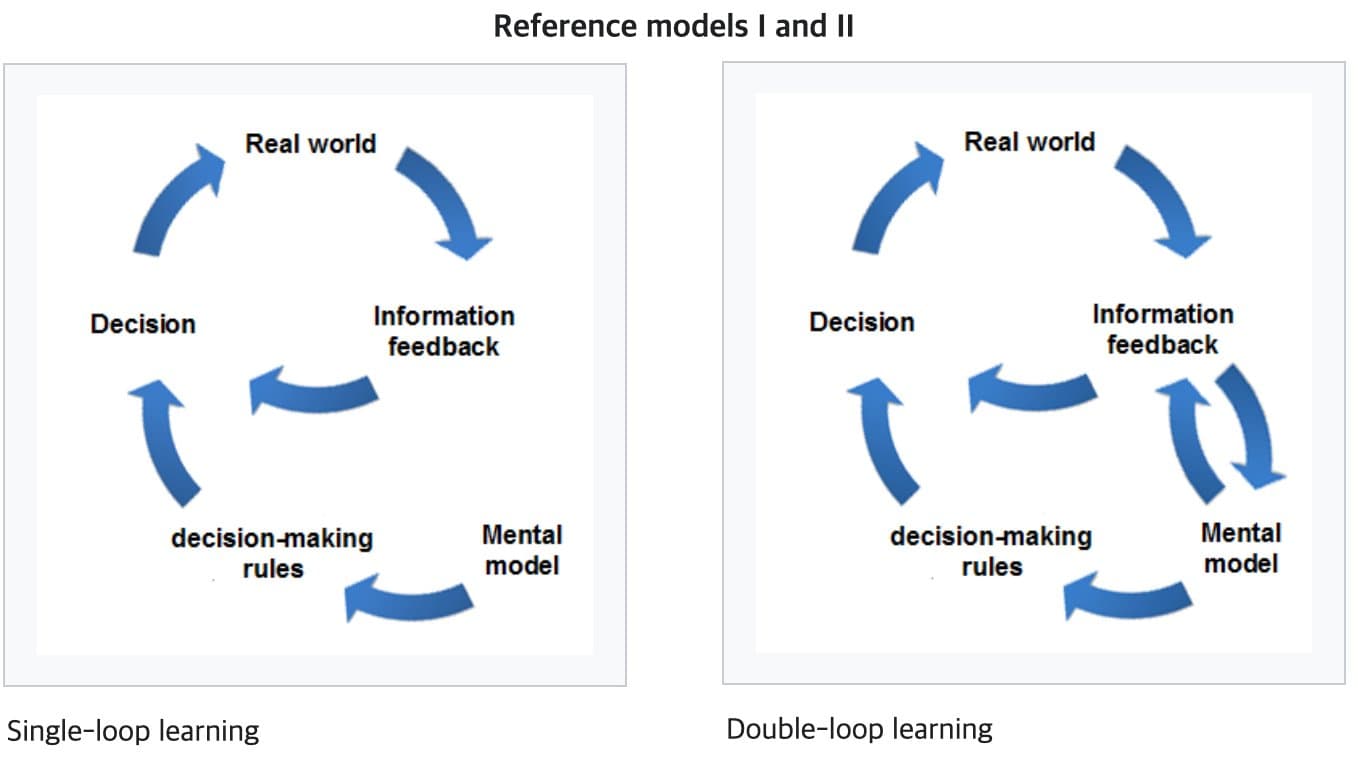
Step 4: Execution → Learning. Based on market feedback, which strategies will we abandon and which will we keep?
Without these four steps connected, vision remains a declaration and the team drifts without knowing what to do.
The psychology of leadership: Self-efficacy creates a team's execution capacity

@Stanfordmagazine
Why do some teams charge eagerly at a grand vision while others hesitate, asking 'Can we really do this?'
Psychologist Albert Bandura's theory of self-efficacy explains this. Self-efficacy is the belief that 'we can successfully accomplish this task.' When this belief is shared across the team, it becomes collective efficacy.
Even the clearest vision remains an empty slogan without the collective belief that the team can execute it. An overly grand vision can overwhelm and paralyze a team.
One of a founder's most important roles is not just to articulate a vision but to design and build the team's self-efficacy. Team efficacy is maximized when the leader breaks down a grand vision into achievable small units, demonstrates success through their own actions first, and creates an environment where the team repeatedly experiences small wins.
Ultimately, a great leader is not someone who shares a vision, but someone who makes the team believe on its own: 'We can make this vision real.'
Luck is not chance—it's probability
When successful founders say 'I got lucky,' the essence is 'meeting the right person at the right time.' But this is not chance—it's a matter of probability.
A single attempt may fail, but repeat enough attempts and one of them will connect to an opportunity. Luck depends on how often you try while accepting uncertainty, how many people you meet and how much you expand your points of contact with opportunity. Luck doesn't come to visions without execution. Lucky people are those who increased the probability pool through execution.
Slack was born from the execution assets of a failed game

@glitch
Slack, one of today's leading collaboration tools, started as a byproduct of a failed online game called Glitch.
Founder Stewart Butterfield and his team faced the crisis of a game's failure after pouring years of resources into it. Most teams would have disbanded. But they had an in-house messenger they'd built and refined daily while developing the game. It wasn't the product of a grand vision—it was a byproduct of the daily execution of making a better game.
The team placed a final bet on this tool's potential. They were convinced that other development teams must be experiencing the same team communication problems they'd faced during game development.
From the outside, it might look like a 'lucky pivot' by a failed game company. But that luck was an opportunity they could seize because they had years of accumulated execution—using and improving the messenger. Slack's birth shows how execution that never stops creates opportunity, not vision.
Four steps to turn vision into team execution
Step 1. Translate vision into questions
You must turn abstract vision into concrete questions for the team to move. The vision 'make the world a better place' must become the question: 'This quarter, which customers' lives will we improve, and how?' The moment vision becomes a question, the team starts moving to find the answer.
Step 2. Prove vision through the leader's actions
A leader's time and behavior are the most powerful message. If you speak of 'customer centricity' as your vision but spend every meeting reviewing financial metrics, the team will follow only financial metrics. When the leader repeatedly demonstrates behavior aligned with the vision, the vision transfers into the team's culture. Just as mastery experience is the most powerful source of efficacy in self-efficacy theory, the leader executing first and proving results is the starting point of team efficacy.
Step 3. Design a structure for vision to transfer
Vision doesn't get shared by saying it once. In meetings, reports and daily conversations, the leader must draw the connection directly: 'This work connects to our vision of OOO.' Structural efforts are needed, such as embedding the vision into onboarding so new hires easily understand it, and repeatedly confirming the connection between vision and execution in weekly meetings.
Step 4. Increase the execution pool to design opportunity
Once the vision is clearly translated and shared across the team, the team is in a state where it can look in the same direction and make more attempts. The leader's role is to encourage and support team members to make more small experiments and challenges aligned with the vision, more often. As the execution pool grows, the probability of encountering opportunity intentionally increases.
The person who believes the vision first and executes it first
A founder's leadership is not the ability to speak a vision, but the ability to prove the vision through daily action. The leader's behavior persuades the team, the team's efficacy creates execution, and accumulated execution turns opportunity into reality.
Ultimately, vision is not persuasion. The leader's execution moves the team, and the team's execution creates opportunity.
Feedback loop to rethink your thinking
Q1. Is our vision a framed slogan or a criterion for daily decision-making?
Q2. Can team members explain how the work they're doing today connects to the company's vision?
Q3. Are we waiting for opportunity to come, or executing to increase the probability of meeting opportunity?
Q4. Are we planning one perfect execution, or encouraging many small executions?
[Startup Codex 22]
Produced with permission from Brunch writer jaha Kim.