From Trading House to AI Virtual Humans: What He's Never Changed Across Industries
19 min read
Related articles
BD Insights
How to Build a Small but Strong Team
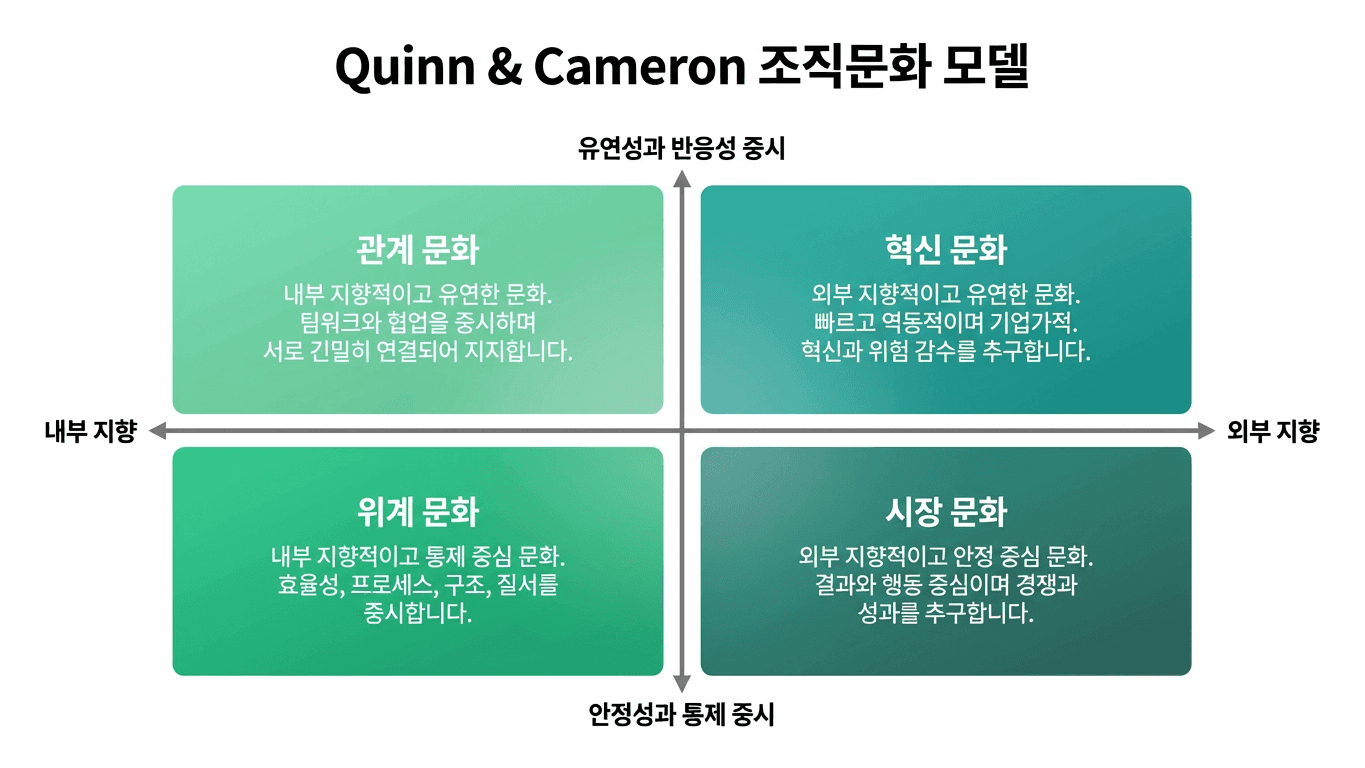
Assembling top individuals doesn't make a team. This article outlines how to design a small but solid team using three principles—role design, execution autonomy, and communication structure—along with the Quinn and Cameron organizational growth model.
Aug 31, 20264 min read
BD Insights
Fleet Learning: How to Turn Problem-Solving Into Organizational Capability
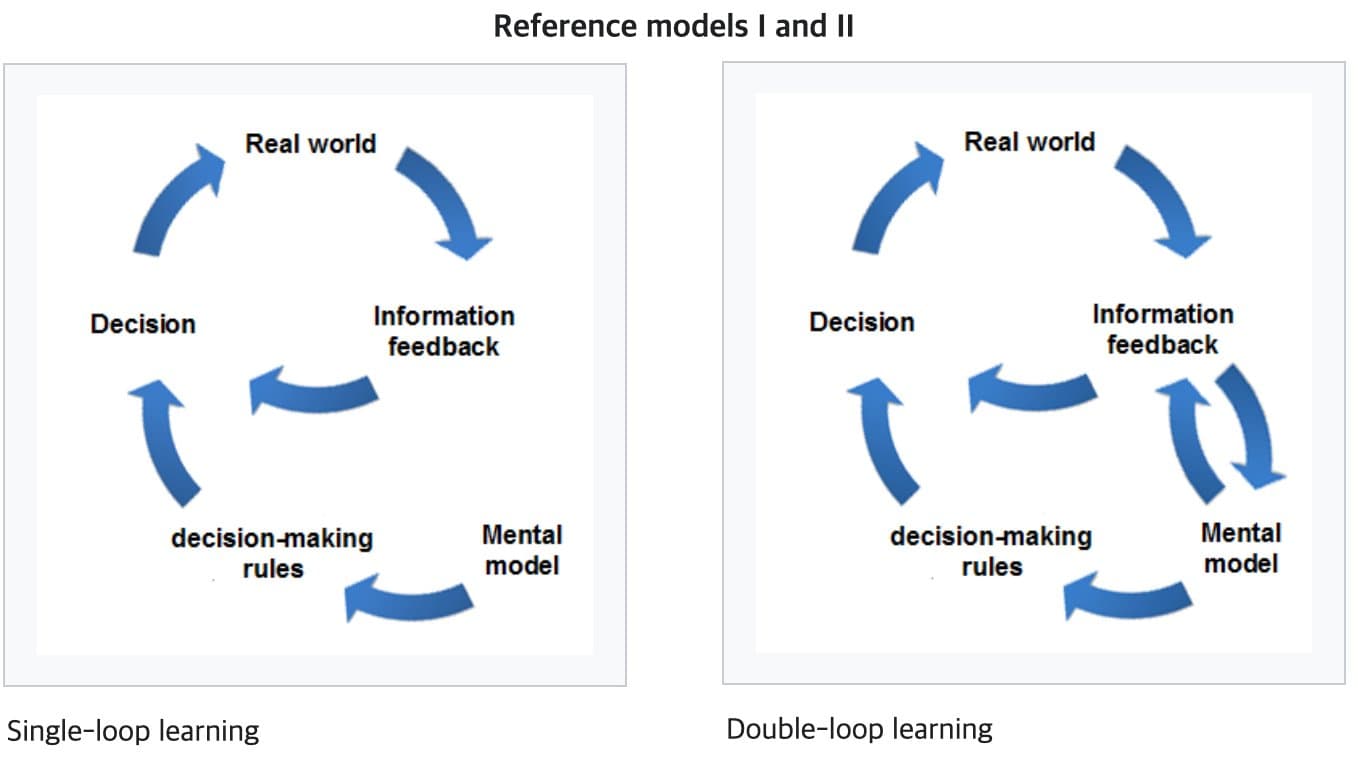
Of Google's countless projects, only about 50% succeed. The company even runs a unique space called 'The Google Cemetery' that displays tombstones of discontinued services. Google dissects these failures like autopsying a body, identifying direct and indirect causes of problems, documenting them precisely, and establishing countermeasures.
Aug 21, 20266 min read
BD Insights
Turning Opportunities into Organizational Capabilities
Open innovation is a paradigm where companies must intentionally bring in external ideas and technologies, share internal assets with the outside world, and create value to survive and grow. In other words, it's about breaking down organizational boundaries and increasing the probability of innovation through active external engagement—clearly demonstrating why 'absorptive capacity' is a core competitive advantage for modern startups.
An expert who has gone deep in one field brings a certain sense of stability. But when you look at CEO Oh Jae-wook's resume, you feel something quite the opposite of that stability.
Starting in the new business team at LG Corp., moving through GOLFZON and SBS Contents Hub, launching a content trading company, raising KRW 10 billion for a virtual human studio, then pivoting to a consulting firm. From trading to golf simulators, from Korean Wave content to AI virtual humans, he's moved freely across domains. Ten job changes, he says.
But as you listen to his story, you realize that all those jumps were actually variations of one thing. He always says, 'When you think about the essence, it all connects.' Creating something from nothing, forming a hypothesis, and verifying if it actually works. This interview is about his 'work' that never changed while constantly switching domains.
Interview Navigation 1. Fifty business plans and what he learned at a trading house 2. The peak of Korean Wave, his first startup on that wave 3. Virtual humans, the beginning of that possibility 4. An experimenter who forms and tests hypotheses 5. Dreaming of Korea's PayPal Mafia
Fifty Business Plans and What He Learned at a Trading House
Q. The BD professionals I meet do such diverse work that I always start with the same question. How do you introduce yourself when you meet people?
When I introduce myself briefly, I say 'business architect.' It means I'm a partner who can discuss the whole picture from the core to how to complete the building. I build my own business, but I always develop it by creating synergy with people around me, so that expression fits.
I found this expression in a paper while studying during my DOB Studio venture. Before that, honestly, I didn't have some grand philosophy driving my business—it was more instinct. I loved creating something from nothing, and I found it incredibly fun how imagination becomes content and that becomes money. Following fun, instinct, and opportunity, at some point I saw a pattern in my behavior. I also realized not all of it was right.
So I started approaching new business development more academically, reading a lot of case studies and international papers, and thought, 'Ah, the work I do and my identity are close to a business architect.' That's how I organized it.
Q. I'm really curious about the journey to becoming a business architect. I heard you've changed jobs ten times. Could you briefly walk us through your entire history?
My first company was LG Corp., now LX International. I was lucky enough to join a CEO-direct organization as a new hire, the new business task force. The mission was 'create a new business the group isn't doing.' But I was constantly compared to a colleague who joined with me. He had a double major in business administration, had done a lot of case studies, and had some training in business development. I majored in languages, so I wanted to do it but didn't know how.
So I trained in feasibility studies almost obsessively back then. Finding niche markets too. We had to bring businesses the group wasn't doing, and when I'd bring one, they'd say 'GS is doing something similar,' or with agriculture-related ones, 'Do you want to see farmers protesting in front of Twin Towers?' If I brought something innovative, they'd say 'The annual market is KRW 10 billion at most—would a conglomerate do a ₩10 billion business?' I reported over fifty business plans, and only one made it to the CEO.
That hard training became the foundation of my business development. But at LG Corp., I increasingly thought 'I can't be the protagonist here.' While thinking that, an opportunity came and I moved to GOLFZON.
Q. How was your time at GOLFZON?
The happiest four years of my career. I'd want to go back even now. I did everything from market research to establish a China subsidiary, establishment planning, actual establishment, then Taiwan business development, going out as an expatriate and local setup. That's when I learned how fun it is to build a business.
My team leader trusted me a lot, so I spent half the year on business trips to Taiwan alone, running countless tests. Going around real estate measuring ceiling heights with a laser, studying Taiwanese law, examining startup patterns by city and age group. I had to learn everything myself—hardware, trade, online communities, local store marketing—and it was so fun. Like a fish in water, that era.
Then a new CFO asked me to join the accounting team. It wasn't time for aggressive business development anymore but to prepare for the group IPO, and I, knowing overseas best, was needed in accounting. But I still wanted to do business development more.
Q. So you changed jobs again. Your next choice was content business, completely different from GOLFZON and LG Corp. Was this also by chance?
Content business was what I'd wanted to do longest. Actually, I was an aspiring singer. In college I even had an exclusive management contract. I did musicals, acappella bands. My talent wasn't that great, I think, but childhood praise has strong impact, you know. So I had this instinctive pull toward content.
I was always watching the broadcasting sector but they rarely hire. But as soon as I opened my resume to headhunters after leaving, the first offer was SBS Contents Hub. What a stroke of luck.
Q. Did you think the work would be similar to what you'd done before? You loved content but hadn't experienced it as work.
I thought the essence was the same. What I do is ultimately business development. Create value, understand who the target is, know what their pain points are and solve them, then it becomes greater value. I learned that basic logic well at LG Corp. When you think about the essence, there's not much difference.
The Peak of Korean Wave, His First Startup on That Wave
Q. You experienced the peak of the Korean Wave at SBS?
In 2014, the Korean Wave exploded in China. <The Heirs>, <My Love from the Star>, <Doctor Stranger>, <Running Man> hit the Chinese market like bombs. There was a new term 'phenomenon-level content' back then, and it was all SBS content. Suddenly in China I became the person doing interpretation and handling contracts. I was the most senior person who spoke Chinese in the SBS group. When executives and the chairman met with high-level Chinese officials, I did all protocol and interpretation, and I handled the most sensitive contract negotiations.
So the Chinese side saw me as someone very senior. <Running Man> is, as far as I know, the most successful Korean content in China and also the content where a Korean company made the most money. Playing a key role in that major project opened up a highway in front of me.
A Chinese broadcaster executive told me then, 'If you start a business, I'll send work your way.' I always tried to structure win-win deals, and I think the Chinese partners recognized that. 'This guy makes decisions that consider us, not just what's advantageous for him.' So I founded TGROUND in March 2015. Two and a half months after starting, revenue came in right away from China.
Q. They kept their promise to send work your way.
They had work piling up to delegate to me. Honestly, it wasn't that I did anything special—the Chinese market was just that good at the time. Then by chance, I ended up mediating a deal to sell Korean webtoons to China. A major Chinese company wanted to buy them, but the negotiations had fallen apart. I reconnected both sides, and in the end, the seller got 3.5 times the original offer and the Chinese side was satisfied too. Turns out this was the first case of Korean webtoons being exported to China with multi-format development rights. After that, Naver Webtoon, Daum Webtoon, broadcasters—they all started reaching out.
That's when I was certain. Creating terms favorable to both sides when a deal happens is clearly difficult, but if there's someone who understands both positions and can propose a compromise, everyone can be satisfied and the deal gets done. In a way, I'm a broker—a content broker. In Korea, 'broker' has a negative connotation, but a senior colleague in the film industry once praised me, saying, 'You're a Hollywood-style broker.' A broker who satisfies both sides. I really liked that.
Virtual Humans: The Beginning of Possibility
Q. Did that momentum continue?
No. When the THAAD issue hit in 2017, China completely shut down. I'd been in a period where I was getting blank checks for top Korean celebrity image rights deals, and suddenly it was a total mental breakdown. I quickly pivoted to one-person media, but then Chinese government regulations blocked that too. So I boldly abandoned China and did anything and everything in the domestic YouTube, MCN, and V-commerce space. I cut staff from six to three and barely broke even, and then a major health crisis hit my family. I had to provide care, so I couldn't run the company normally.
Eventually I let all my employees go and got a job. I joined the Korea office of ODK Media, a US OTT company, handling Chinese content sourcing and programming strategy. My mental state really collapsed during that period. Before THAAD, I thought I'd become a chaebol. When I went to China, limousines picked me up at the airport and I was in the media. But when such huge failures came one after another, I felt like it was all my fault.
Q. To choose entrepreneurship again in that situation—it's hard for me to imagine. What was going through your mind?
When I was feeling dejected, a close accelerator friend said, 'You're too valuable to waste—let's try again.' Those words gave me so much strength. These hardships had happened due to things beyond my control, so I thought, let's start again with my own power.
One of my business ideas was virtual humans. With influencers and celebrities, as their popularity grows, the power of the company that built them weakens. You lose control and opportunities for more diverse monetization. I started with the hypothesis that 'if a company owns the IP of a face, we can solve this.' The accelerator who suggested I try again actually raised KRW 100 million in investment, and I became CEO in July 2020.
Fortunately, it went well. Before the first year ended, we raised KRW 3 billion in pre-Series A, KRW 10 billion over four years, and the company won about 20 awards. Even though I hadn't been in advertising that long, I won the Gold Prize at the Korea Advertising Awards for the Youn Yuh-jung de-aging ad. I thought, 'I've proven myself.'
Q. What was DOB Studio's core business model?
Selling virtual faces. DOB stands for Dream of Butterfly, from Zhuangzi's butterfly dream. I believe we're already in an era where the digital world matters more than analog. In the analog world, we're miserable beings—our bodies age, get tired, and money is finite—but the moment we log into the digital world, we can become anything and go anywhere.
So an age might come when your face in the virtual world is more important than the face you inherited from your parents—an age when you change faces like changing clothes. The metaverse boom happened during COVID, I wrote a book and secured the keyword 'virtual human,' then the AI boom came, so we got three major pushes. But ironically, I couldn't keep up with that speed myself.
Q. After all those ups and downs, you built the company quickly, but leaving a company that was doing well couldn't have been an easy decision.
I burned myself out too much. My homeostasis collapsed, my body broke down, and when my body broke down, my mental state collapsed with it. I'm normally always bright, challenging, and optimistic. I'm someone who believes 'if you don't give up, there's always a way to survive,' even when problems keep coming. But I lost that homeostasis.
I felt so sorry to those who believed in me and invested. As a professional, I should have managed my health better. But I judged I was beyond my capacity, and for the company to survive, it was right to hand it over to someone who could do better than me. I think I made a good, quick decision so a successful business wouldn't collapse because of me. Even though the company was wrapped up, it took almost a year for me personally to recover afterward. Fortunately, I started regaining my homeostasis around the middle of last year.
An Experimenter Who Forms and Tests Hypotheses
Q. Watching you get back up after falling and pour passion into new ventures again—the phrase 'entrepreneurial spirit' comes to mind. Do you think you have entrepreneurial spirit?
I think two things are strong in me. First, with complete honesty, I want to be rich. I grew up hearing that my grandfather made big money in trade. There were photos at my grandmother's house of him dining with President Park Chung-hee and founders of major corporations. Those adventure stories stayed with me as childhood fantasies. But my father failed at business three times, so my mother raised us on an overdraft account. That's why I had this strong desire to 'live comfortably.'
The other thing is my attention-seeking streak. I wanted to be an entertainer, so I came to think about taking the stage through business. When I tasted the peak of Hallyu at SBS, I was completely captivated by that glory of basking in reflected light even as someone on the sidelines. That's why I did my master's in Hallyu management too. Based on these traits and desires, I'm clearly someone with a strong desire to properly do cool business that benefits the world.
Q. Then how do you define the role of a BD professional?
Lots of people come up with ideas. But few people actually determine whether it's viable, whether it's worth investing money in, and then move forward with the experiment.
You list all your hypotheses in Excel and enter numbers, but if those numbers have no basis, it won't work. So you do thorough market research to secure that basis. Just like opening a restaurant requires counting people in that commercial district, research methodology differs for each business model. Doing everything from idea to actual money generation—that's the BD professional's role. An experimenter who forms viable hypotheses and validates them. Hypotheses are wrong so often that you have to keep going without getting discouraged.
Q. So do you see entrepreneurs and BD professionals as different?
I see them as similar. The difference is mainly that entrepreneurs have a stronger sense of creating 'their own thing,' while BD professionals can also do it for others. The weight a BD professional should feel is comparable to an entrepreneur's. A wrong decision can put the company at risk. That's why I think BD professionals should fundamentally be on the CEO's staff.
And you must be humble. My hypotheses can't be 100% right. No matter how confident I am, there are so many cases where a completely unexpected layer is missing and you reach a wrong conclusion. As someone who's pivoted like it's second nature, my default is actually 'this is probably wrong.' In the end, customers have to open their wallets, and you're combining countless assumptions to predict that. The logic is exactly the same as controlling variables and repeating in scientific experiments.
Q. You emphasize academic study too—isn't there a risk of getting trapped in theory?
So I think it's always about balance. You study, but you understand the principles and the core. Some people approach it too academically, saying 'What I learned is right, it's been validated throughout history.' That's all well and good, but times change so fast. Just as people before the Industrial Revolution couldn't imagine what came after, AI is now undergoing the greatest evolution in human history.
So rather than memorizing theory wholesale, you need to understand why it emerged, the core of it. Human instincts don't change easily, so if you understand them, you can predict how those instincts will shift when the environment changes. People who don't study are too wild—they learn through their bodies. Like me. Even after looking at all those papers, I ended up learning through my body.
Dreaming of Korea's PayPal Mafia
Q. I'd like to hear more about China business, one of your areas of expertise. You've been doing business in China for a long time—are there any recurring patterns of failure or success?
When you collect the cases, there aren't that many success stories in China. A lot of people view China negatively, but I actually think Chinese businesspeople as partners are more rational and warmer than in Korea. If you genuinely care about your customers and do business that way, there's no reason you can't succeed. Even during the THAAD era, Korean influencers who went all-in on China and thought about content for local fans are all doing well.
However, many people think that with such a large population, if you just charge 1 won per person that's 1.4 billion. But who's going to make irrational purchases? You need to research what triggers Chinese consumers to open their wallets, and that cost is enormous. That's why I'm cautious about overseas business. I believe you absolutely must set up local partners. Ultimately, the code that opens wallets is subtle, and to click precisely on that point, you can't do it without locals.
Q. Do you have any anecdotes where you realized that 'code' differs by region?
During my GOLFZON days, I had a mission to establish the screen golf business in China. When I went to a golf driving range in Beijing, unlike Korea, it was a completely high-end entertainment venue. Each booth had a glass-walled room with premium sofas and liquor, and the culture was to drink and discuss business, with people taking turns going out to hit golf balls.
On the other hand, a distributor in another region of China sold 30 units in less than six months. It was an unbelievable number, but it turned out the businessperson installed one in his villa and invited friends to show it off. Like 'I'm the kind of person who has this installed at home to play with.' It completely triggered the vanity desires of the wealthy. The friends who saw it all placed orders, and through word of mouth, it reached 30 units.
That's why even though I have quite a bit of China business experience, I never call myself a 'China expert.' I can't even say 'I'm a Korea expert' about our country of 50 million, so how could I master a country of 1.4 billion where the culture and ethnicity differ by province? I think you can't call yourself an expert unless you can sense the code, atmosphere, and how emotions flow in that region.
Q. These days Korea is very interested in global business, so you must receive many consulting proposals.
What I consider most important is a win-win structure. Sometimes there are people who think they have the upper hand and act superior while trying to take more, but that's so short-sighted. The upper hand can change anytime. It has to be win-win to be sustainable, to get referrals, and to build my reputation. My relationship with Chinese partners I've been close with for over 10 years is the same. We're like friends who ask about each other's families, but ultimately the relationship has to be mutually beneficial for that guanxi to remain valid. I believe 'all roads, even if distorted, eventually return to the right path.'
Want to meet Oh Jae-wook, CEO of TGROUND, who has gone through 5 startups, China content export business, 10+ global distributor and sales agent contracts, and hundreds of startup mentorings, to hear firsthand about his decision-making moments in global expansion?
Q. Finally, I'd like to ask about your ultimate goal.
I want to run an accelerator-type company like Y Combinator. To be more blunt, I want to create Korea's PayPal Mafia. I can create and validate business models. But you need people with the capabilities to execute them, right? If we cultivate that talent together and place them in good positions, wouldn't it be entirely possible?
And this might sound strange, but I also want to do proven businesses like samgyetang restaurants at overseas locations. Look at Haidilao. Since robots do the serving, the existing service staff now slice vegetables and engage in more customer interaction. As AI and robots replace human work, people will miss human warmth even more. That's why I think we need to meet more offline. Eating together, having coffee. I think F&B can be a venue for that kind of experience.
Fundamentally, I love teaching and helping people. I enjoy lecturing and gladly sharing my experience. The problem is that if you just give it away, there's no money in it. So I really want to create a structure where I can make money while doing what I love.
OUTRO
After hearing Oh Jae-wook's entire story, you realize that those seemingly chaotic jumps were actually a straight line. The domains changed every time, but what he did was always the same: creating something from nothing, setting hypotheses, and validating whether they actually make money. He calls this the 'essence' of business development. Because he held onto that essence, he could fearlessly jump into unfamiliar markets each time, and thanks to that essence, he could remain the same person in any domain. Believing that 'all roads eventually return to the right path'—what he's truly built beneath his impressive career might be this plain attitude.
He still honestly says he wants to become rich and stand on stage. Meeting CEO Oh Jae-wook through this interview, I get the feeling he'll definitely make that stage not a place where he shines alone, but one where everyone who built it together can stand. That's why his dream of Korea's PayPal Mafia doesn't sound like mere ambition.