How to Find Your Scale-Up Path Through Competitor Analysis
5 min read
Related articles
BD Insights
How to Build a Small but Strong Team
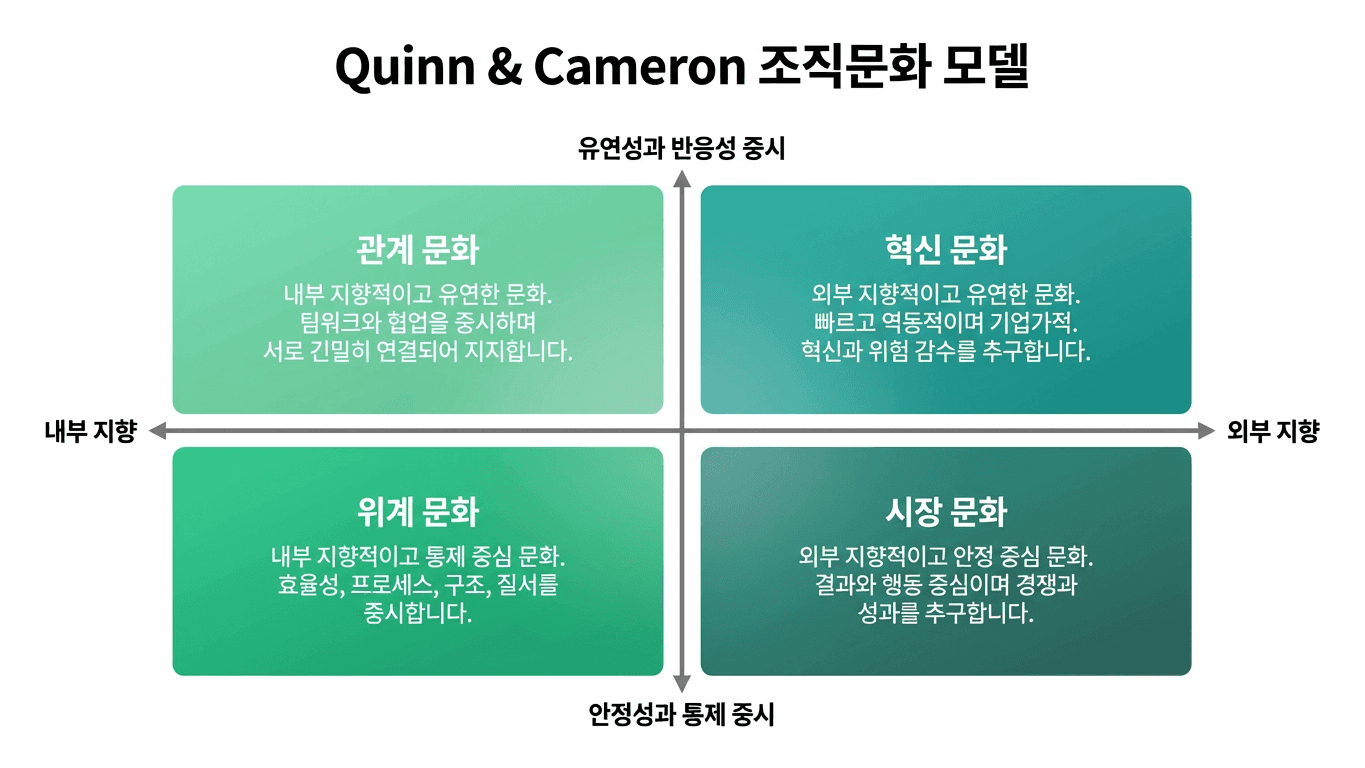
Assembling top individuals doesn't make a team. This article outlines how to design a small but solid team using three principles—role design, execution autonomy, and communication structure—along with the Quinn and Cameron organizational growth model.
Aug 31, 20264 min read
BD Insights
Fleet Learning: How to Turn Problem-Solving Into Organizational Capability
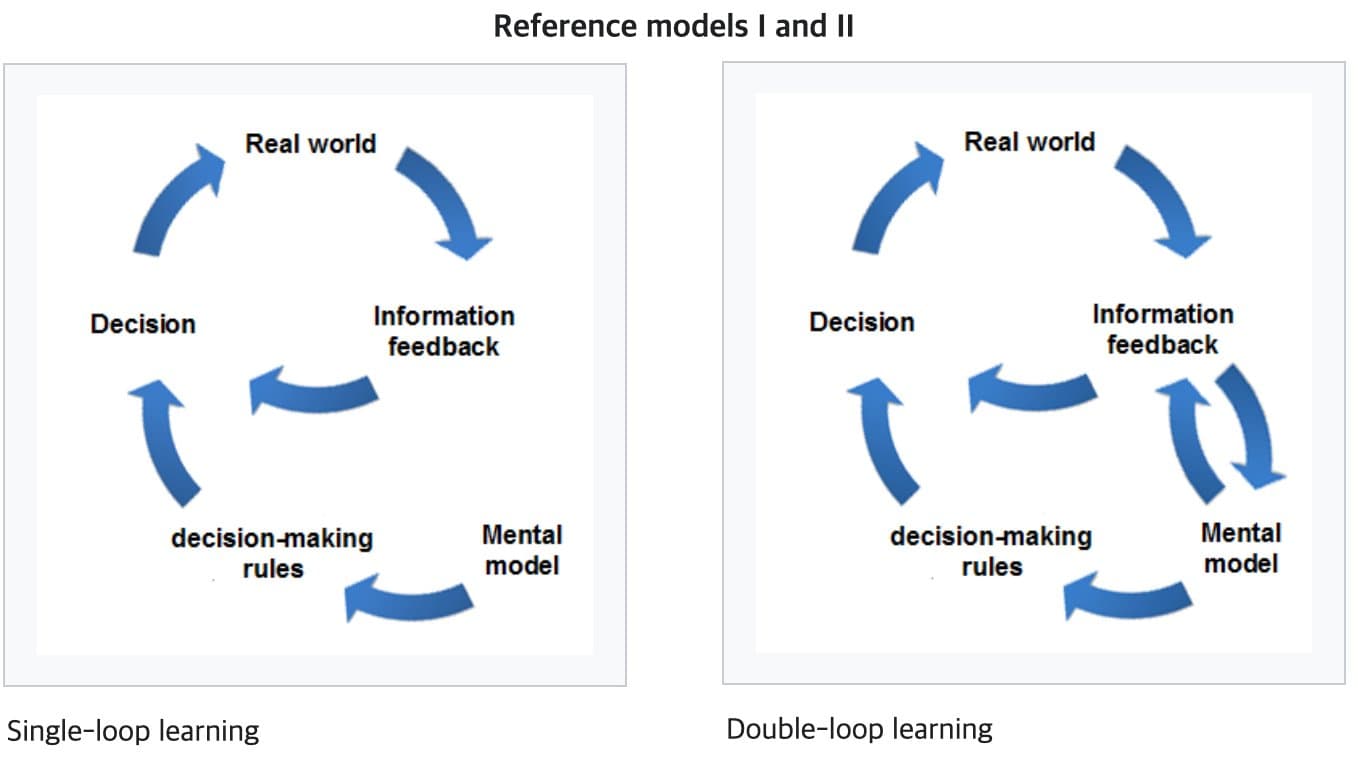
Of Google's countless projects, only about 50% succeed. The company even runs a unique space called 'The Google Cemetery' that displays tombstones of discontinued services. Google dissects these failures like autopsying a body, identifying direct and indirect causes of problems, documenting them precisely, and establishing countermeasures.
Aug 21, 20266 min read
BD Insights
Turning Opportunities into Organizational Capabilities
Open innovation is a paradigm where companies must intentionally bring in external ideas and technologies, share internal assets with the outside world, and create value to survive and grow. In other words, it's about breaking down organizational boundaries and increasing the probability of innovation through active external engagement—clearly demonstrating why 'absorptive capacity' is a core competitive advantage for modern startups.
CODEX 10. Competition is not simply about comparing yourself to others—it's about designing the criteria for comparison itself
If you fight within a comparison chart created by competitors, even winning becomes a war of attrition. Through strategic group analysis and the Instagram vs. Snapchat case, we've organized a competitor analysis framework that redesigns the market's comparison criteria itself.
Competitor analysis is not about speed competition—it's about route design
Many founders compare the market to a giant mountain and use competitor analysis as a tool to reach the summit faster on the same path. They ask, "What equipment is that team using?" and "Is there a faster shortcut we can take?"
But this misunderstands the nature of competition. There isn't just one path up the mountain. Some take the safe hiking trail, others take the cable car, and still others climb rock faces to reach the top. The purpose of competitor analysis is not to climb faster than others, but to design our own route and precisely satisfy the customers who want that route.
Competitors are not threats. They are pioneers who explored the market before us and guides who help clarify the identity of our position.
Strategic groups: Draw a structural map of the market
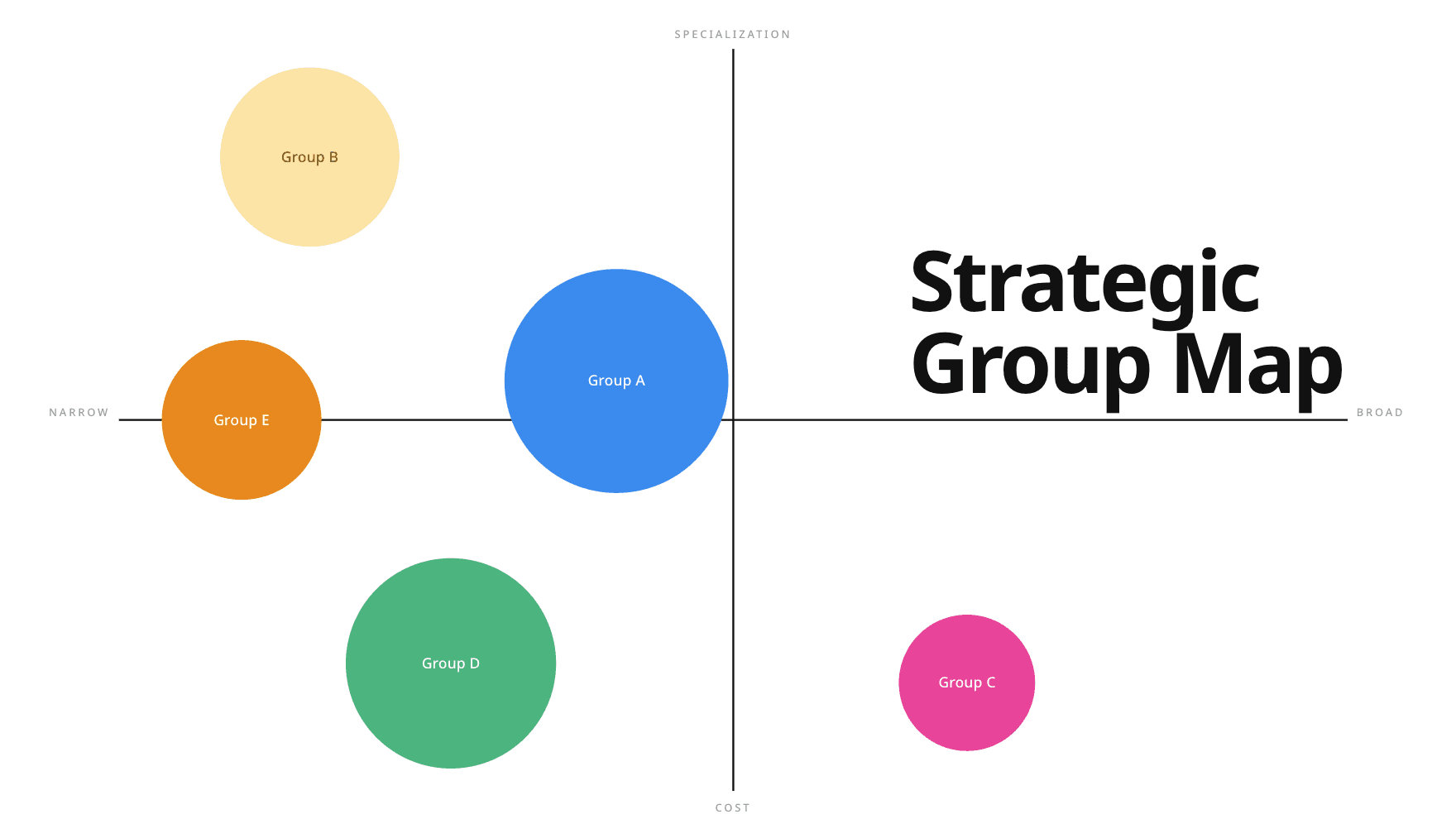
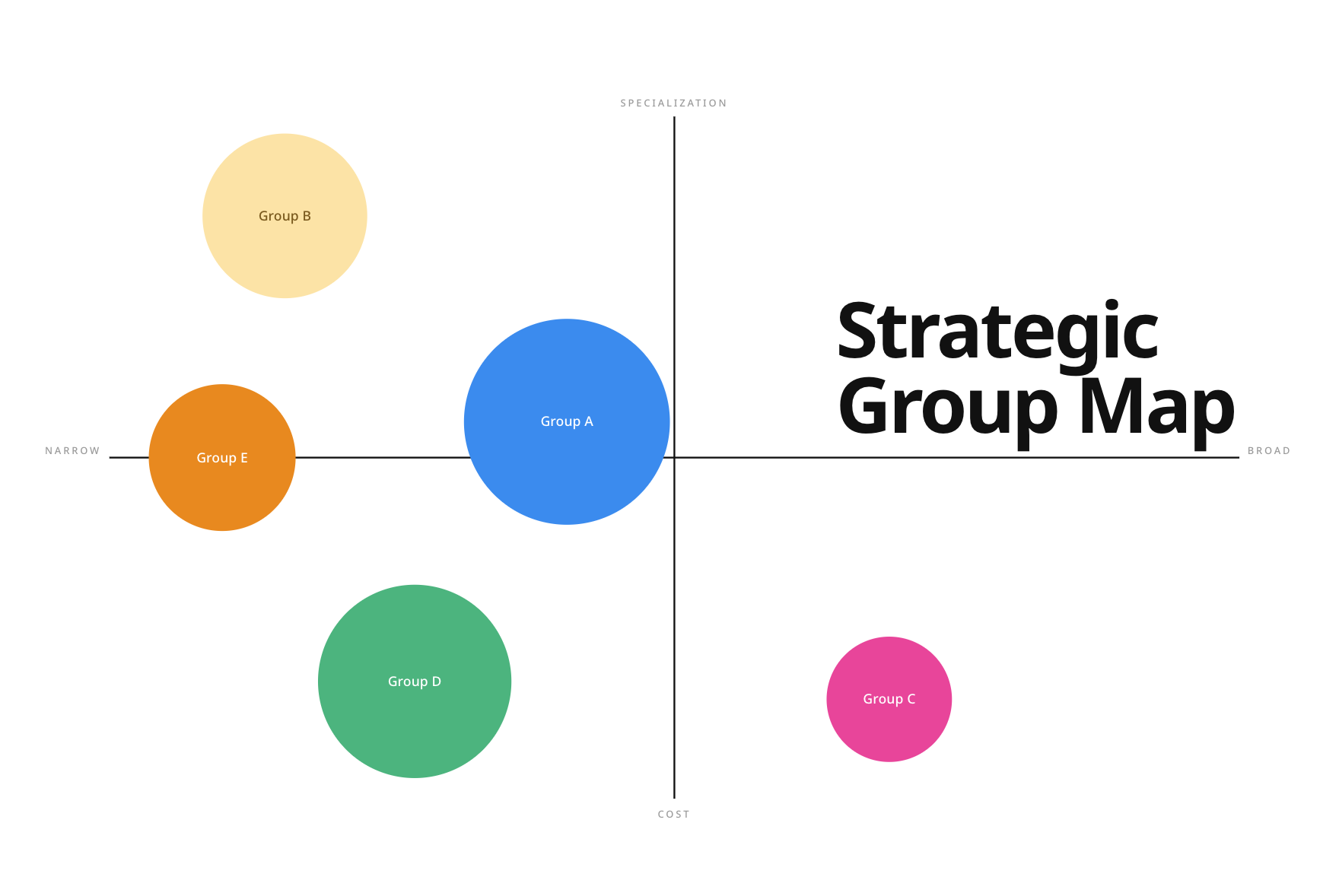
Strategic Group Framework Example
Listing competitors one by one is not analysis. The Strategic Group framework proposed by management scholar Michael Porter is a method of drawing a structural map of the market by grouping companies that compete with similar strategies into clusters.
For example, if you map the collaboration tool market on two axes—'feature complexity' and 'target customer size'—you'll see several distinct clusters: low-price simple group, mid-price team-optimized group, high-price enterprise group, etc. Completing this map yields three insights.
First, you see your real competitors.
The group positioned closest to you on the map is your direct competitor. They're the ones you overlap most fiercely with over customers, resources, and market perception. Groups further away are indirect competitors for now, so resource allocation priorities differ.
Second, you see market gaps (White Space).
Areas where no one has established position on the map represent opportunities. If the 'enterprise-level yet very simple and intuitive' collaboration tool market is empty, that's a position we can pioneer.
Third, you see future threats and expansion paths.
If low-price groups are moving up by adding premium features, they're likely to collide with us eventually. Conversely, after dominating a niche market, this map helps you determine which adjacent group to move into next.
Redefining the comparison frame
Real competition in the market is not a fight over 'who has better features.' It's a battle for perception—securing 'what criteria customers will use to make their choice.'
If you fight on a comparison chart created by competitors, even winning becomes a war of attrition. Instead, you must present new comparison criteria to the market that favor you. Competition is not simply about comparing yourself to others—it's about designing the criteria for comparison itself.
If competitors defined the market by 'speed,' we redefine it by 'quality of experience.' If competitors fight on 'price,' we shift the standard to 'safety and success rate.' When the criteria customers use for comparison change, existing competitors' strengths become neutralized and our strengths become highlighted.
Instagram didn't fight by Snapchat's rules
@Instagram
In 2016, Snapchat's 'Stories' feature introduced new comparison criteria to the social media market. Instead of 'edited and polished content,' it offered 'light and authentic sharing of everyday moments,' and young users responded rapidly. For Instagram, which dominated the market with 'well-edited photo feeds,' this was a clear threat.
Instagram didn't compete with Snapchat on 'story feature completeness' in a speed race. Instead, they precisely analyzed the user behavior patterns Snapchat had pioneered. Then they naturally layered the Stories feature onto their core asset—a massive user network and existing feed.
The comparison criteria changed. Snapchat's criterion was 'the fun of the story feature itself,' but Instagram presented the criterion of 'having the same experience on a platform where your friends are already gathered.' Users could get the same value in a familiar space without downloading a new app.
Instagram analyzed competitors' strategies but didn't fight within the rules competitors had set. They designed new comparison criteria that maximized their own strengths and captured the market's momentum.
Three steps from competitor analysis to positioning design
Step 1. Map the Strategic Groups
Map all major competitors in the market on two core axes (e.g., price × feature complexity, target size × expertise, etc.). Understand which customers each competitor targets, what value they propose, and how they generate revenue from a 4P (Product, Price, Place, Promotion) perspective. The key is not simply comparing features, but understanding each group's strategic philosophy and competitive approach.
Step 2. Redefine the Comparison Frame
Identify our position on the strategic group map and spot White Spaces. Then ask: "What comparison criteria have competitors established, and what new criteria would favor us?" These criteria become our positioning and the starting point for all product design and communication.
Step 3. Answer the Why-Us Question
Based on the redefined comparison criteria, create a clear answer to "Why should customers choose us over other options?" This answer becomes our Value Proposition and the core strategy that runs through every message we present to the market.
It's not about beating competitors—it's about creating the rules of competition
The ultimate goal of competitor analysis is not creating better features. It's designing the very criteria by which the market views us. If you try to win within rules set by competitors, you fall into a war of attrition; change the criteria for comparison, and the game itself changes.
[Startup Codex 22]
Created with content used with the consent of Brunch writer jaha Kim.