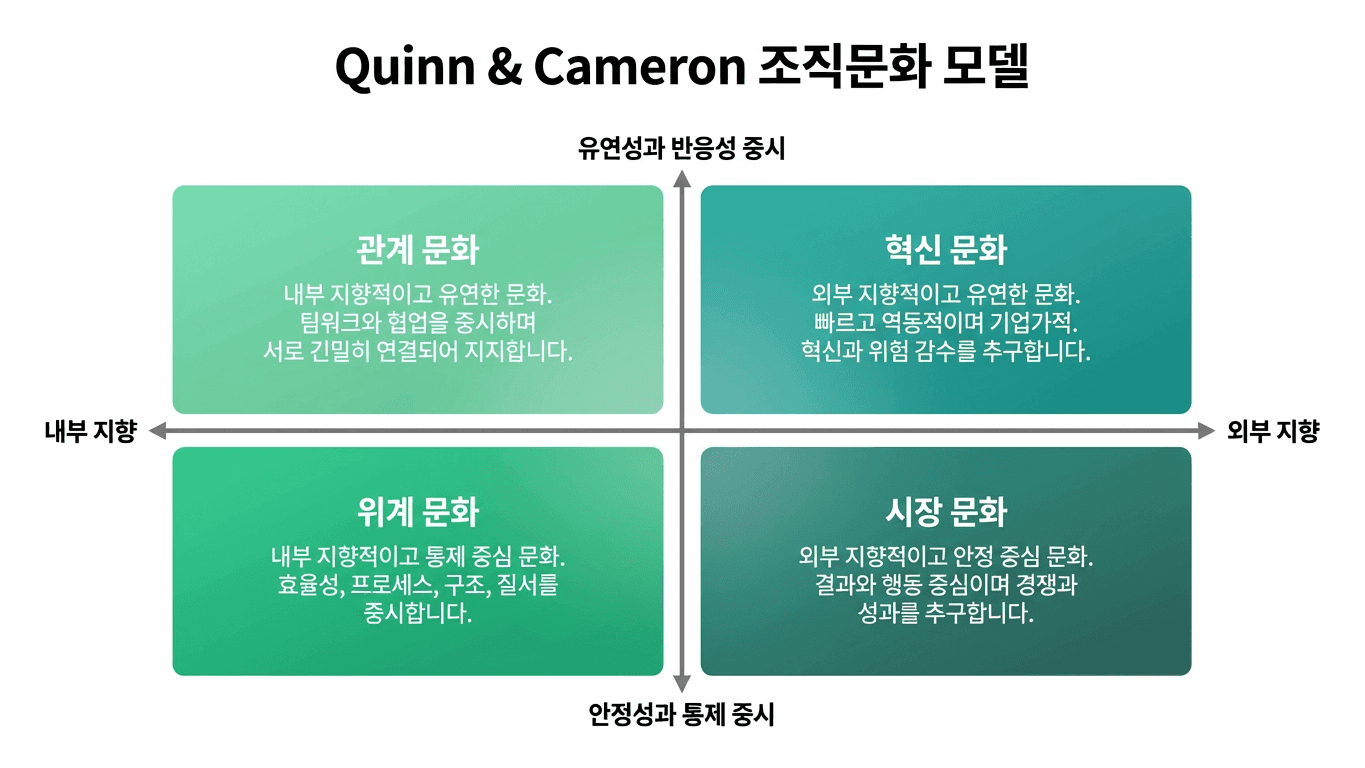
Assembling top individuals doesn't make a team. This article outlines how to design a small but solid team using three principles—role design, execution autonomy, and communication structure—along with the Quinn and Cameron organizational growth model.
Aug 31, 20264 min read
BD Insights
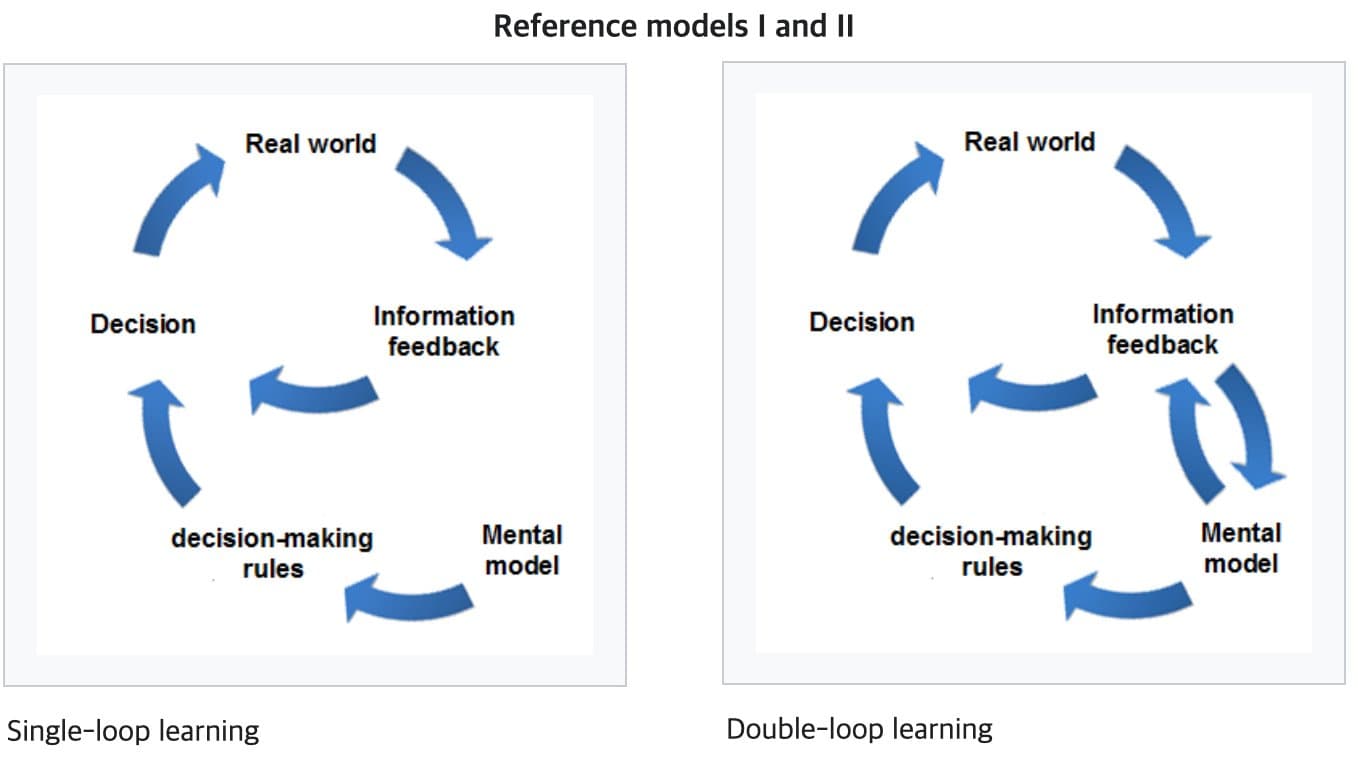
Fleet Learning: How to Turn Problem-Solving Into Organizational Capability
Of Google's countless projects, only about 50% succeed. The company even runs a unique space called 'The Google Cemetery' that displays tombstones of discontinued services. Google dissects these failures like autopsying a body, identifying direct and indirect causes of problems, documenting them precisely, and establishing countermeasures.
Aug 21, 20266 min read
BD Insights
Turning Opportunities into Organizational Capabilities
Open innovation is a paradigm where companies must intentionally bring in external ideas and technologies, share internal assets with the outside world, and create value to survive and grow. In other words, it's about breaking down organizational boundaries and increasing the probability of innovation through active external engagement—clearly demonstrating why 'absorptive capacity' is a core competitive advantage for modern startups.
The critical threshold where investment doors open for a startup exists precisely in the transition from 'competitive advantage (Better Than)' to 'differentiation (Only One).' Achieving an 'absolute Only One position' means proving distinctive product value that solves a specific problem, and demonstrating market dominance and scalability that maintains that position even after competitors emerge.
There's a phrase heard most often at startup presentations: "We're faster, more accurate, and more convenient than our competitors." They list countless 'competitive advantages' claiming their product is superior. But almost nothing sticks in customers' minds.
This stems from a fundamental misunderstanding of 'how to win.' Most startups willingly walk into the playing field already set by big corporations. Then they begin a game they're destined to lose, competing over 'who does it better' against giants with vastly superior resources. A strategy of adding features, specs, and conveniences one by one ultimately leads to a war of attrition.
But true differentiation starts not with addition but with 'subtraction.' Not broader customers, but narrower ones. Not more features, but clearer problem-solving. Not flashier descriptions, but a single message. Only when you strip everything away and focus on just one thing does a 'product' emerge where the competitive arena itself disappears.
Competitive Advantage vs. Differentiation
A startup's survival begins with deciding which game's rules to follow. The choice is clearly binary: will you fight in the fiercely competitive red ocean, or will you pioneer a blue ocean where no one else exists?
Competitive advantage is a red ocean strategy. It's a strategy of offering better terms than competitors within the established rules of the game. It's a battle to steal market share through lower prices, faster speed, and more features. But this strategy remains a 'relative' advantage, vulnerable whenever a superior competitor emerges.
Differentiation is a blue ocean strategy. A startup's differentiation isn't simply being 'different.' It's a strategy that redefines the game's rules themselves, making comparison meaningless. It neutralizes competition by eliminating elements the existing industry takes for granted or creating new value. It means creating an 'absolute Only One position' where customers think only of your name, with no other alternatives, when a specific problem comes to mind.
Product development for startups shouldn't be about becoming a better player in the red ocean, but rather creating a blue ocean where we alone can be the protagonist, establishing the perception that "for this problem, there's only this."
Evolution Stages of Product Development: From Relic to National Treasure
Strategic positioning in product development bears a striking resemblance to Korea's cultural property classification.
A National Treasure (Only One) is a unique existence beyond comparison. It makes customers seek it out based on identity and raison d'être alone, not function. Like National Treasure No. 258, the 'Blue-and-white Porcelain Vase with Bamboo Design,' with its octagonal form among countless round porcelain pieces—the existence itself is the differentiation.
A Treasure (Number One) is an existence recognized as representative within a specific category. Among countless porcelain pieces of various shapes, the best becomes a Treasure. In business terms, it's the state of becoming the market's representative brand, like "Among English conversation apps, Speak is the Treasure."
A Relic (Better Than) is an existence competing on function and specs, replaceable at any time. It may be a good product, but like countless relics in a museum, it's hard to remain in customers' memories.
Startups must begin from the 'National Treasure' position. Even if it's a very small museum (niche market), the first goal should be to be recognized as an irreplaceable National Treasure there.
A startup's product development strategy must evolve in this order: Only One → Number One → Better Than. Attempting Better Than from the start leads to sinking into price/spec competition without securing uniqueness in memory.
The critical threshold where investment doors open for startups exists precisely in the transition from 'National Treasure' to 'Treasure.' Becoming a 'National Treasure' proves distinctive product value solving a specific problem, and maintaining the 'Treasure' position even after competitors emerge proves market dominance and scalability. Investors become convinced of a startup's future value at exactly this point.
How WHOOP Became a 'Recovery Coach' Rather Than a 'Fitness Tracker'
Source: WHOOP website
The wearable market dominated by Apple Watch and Galaxy Watch is the most typical red ocean. Most companies were focused on 'Better Than' product competition—more features, more beautiful design, more accurate step counting. Startup WHOOP's product development strategy entering this market was a perfect 'Only One' design.
Stage 1. Becoming a National Treasure: Finding a Playing Field With No One Else
WHOOP didn't build a 'better smartwatch.' Instead, they first chose a customer no one in the market had properly satisfied—'professional athletes and fitness enthusiasts who must maintain peak condition'—a customer with no competition.
And they observed their lives. These people had no interest in step counts or KakaoTalk notifications. Their urgent wants were two things: "Is my body in the best condition to perform at its peak today?" and "How should I train to minimize injury risk?" WHOOP dug into precisely this point.
They boldly removed screens, notifications, step counting functions, and concentrated all technology on measuring 'Recovery' status alone. By analyzing sleep quality, heart rate variability (HRV), they provided a clear answer every morning: "Your body recovery score today is X. Train hard today" or "You need recovery today, go light."
After a test group of professional and fitness athletes used WHOOP for four months, sleep time increased by 41 minutes and alcohol consumption decreased by 79%. Heart rate increased by 8 beats per minute and injuries decreased by 60%.
WHOOP no longer competes with Apple Watch. For professional athletes, WHOOP became the one and only 24-hour recovery coach (product) managing performance and preventing injuries—a National Treasure.
Stage 2. Becoming a Treasure: Strengthening Branding From the Preempted Position
Competitors seeing WHOOP's success began adding similar 'recovery' features. At this point, WHOOP didn't engage in competition over 'longer battery life' or 'prettier straps.' Instead, they strengthened branding from their preempted 'Only One' position.
Messaging "The only solution trusted by the world's best athletes to prevent injuries," they released actual usage data from top-tier athletes like Michael Phelps and LeBron James. Establishing official partnerships with professional sports leagues like the NFL and PGA Tour, they monopolized the emotional value of 'scientific credibility' and 'expert validation,' not just functionality.
As a result, WHOOP became the unrivaled representative—a Treasure—in the category of 'human performance optimization.'
Designing an 'Only One' Product
Stage 1. Find a Playing Field With No One Else
Don't look at the entire red ocean market; find the underserved customer group within it that giant corporations don't care about. Identify what their problem is and why no one properly solves it. Where there are no competitors—that's your first playing field.
Stage 2. Combine Existing Needs With New Wants
What is the universal product (Need) that your chosen customers already use in their daily lives? And what is the most pressing problem (Want) that they have not yet solved? Like the combination of a tumbler (Need) and medication reminders (Want), you must merge these two into a single product and present a solution that no one has imagined before.
Step 3. Name and own the new category
Once a new product is born through combination, you must create and declare a new category for that product. Philly did not create a 'smart tumbler' but a 'health management partner' category. The one who defines the category becomes the first ruler of that market.
A startup's first goal is not to make 'a better product' but to design 'an incomparable product.' Our goal is not to win a fight but to create a unique position where there is no need to fight.
This content was produced using [Startup Codex 22] with the permission of Brunch writer jaha Kim.
If you are curious about other content by jaha Kim, you can check it through the link below.