BD Insights
Loading...

BD NOTE
가*
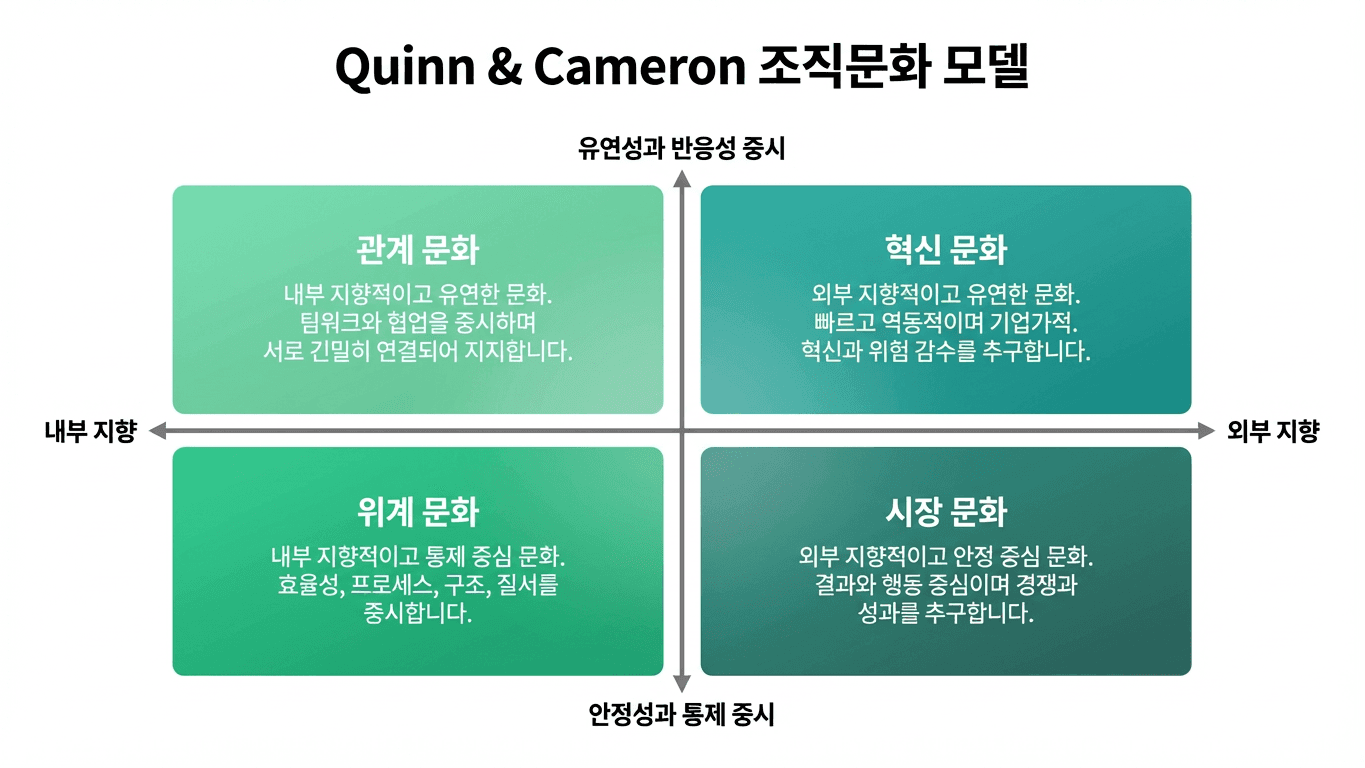
Gathering the best individuals doesn't make a team. This article outlines how to design a small but solid team using three principles—role design, execution autonomy, and communication structure—along with Quinn and Cameron's organizational growth model.
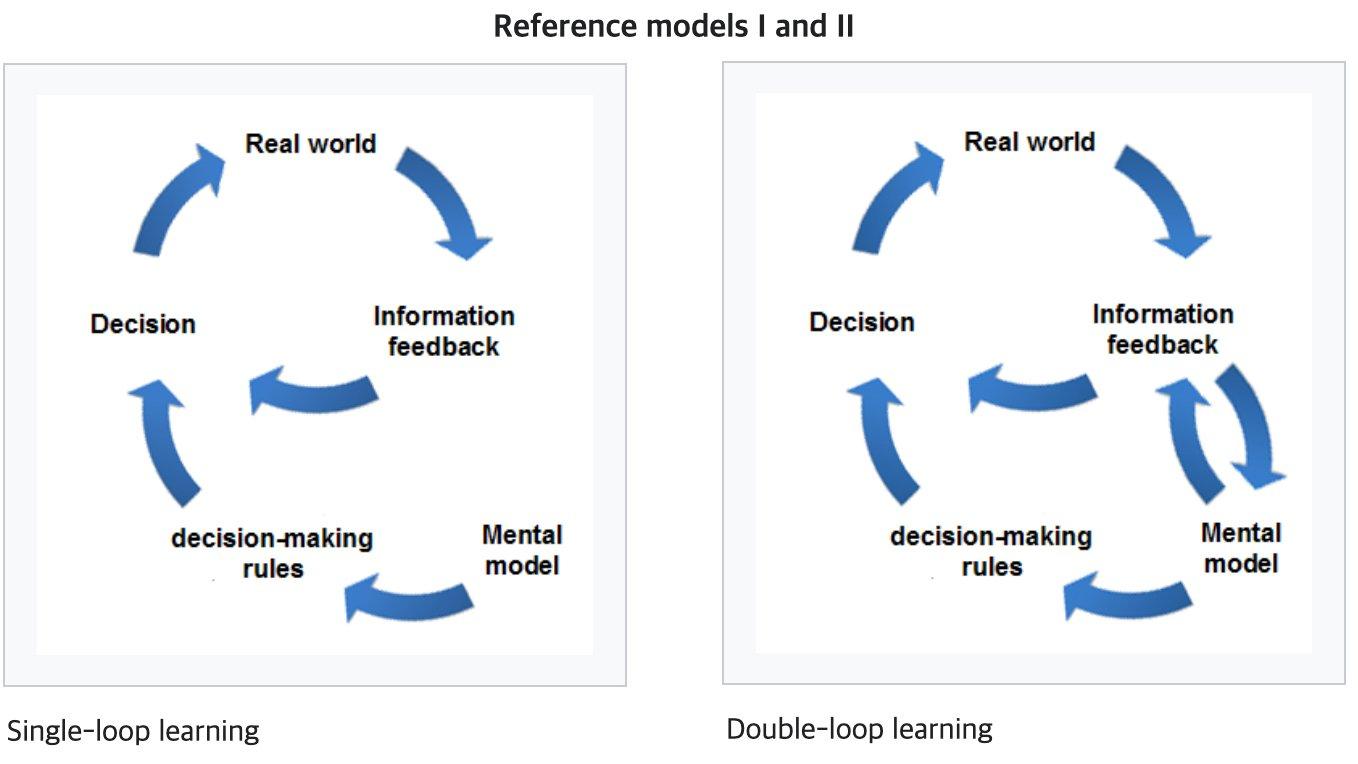
Among Google's countless projects, the success rate is only around 50%. They even operate a unique space called 'The Google Cemetery,' which displays the tombstones of discontinued services. Google autopsies these failures, identifying direct and indirect causes of problems, accurately recording them, and establishing countermeasures.

Open innovation is a paradigm that demands companies intentionally bring external ideas and technologies inside, share internal assets with the outside, and create value in order to survive and grow. In other words, it means breaking down organizational boundaries and raising the odds of innovation through active external interaction—and this clearly shows why 'absorptive capacity' is a core competitive advantage for modern startups.
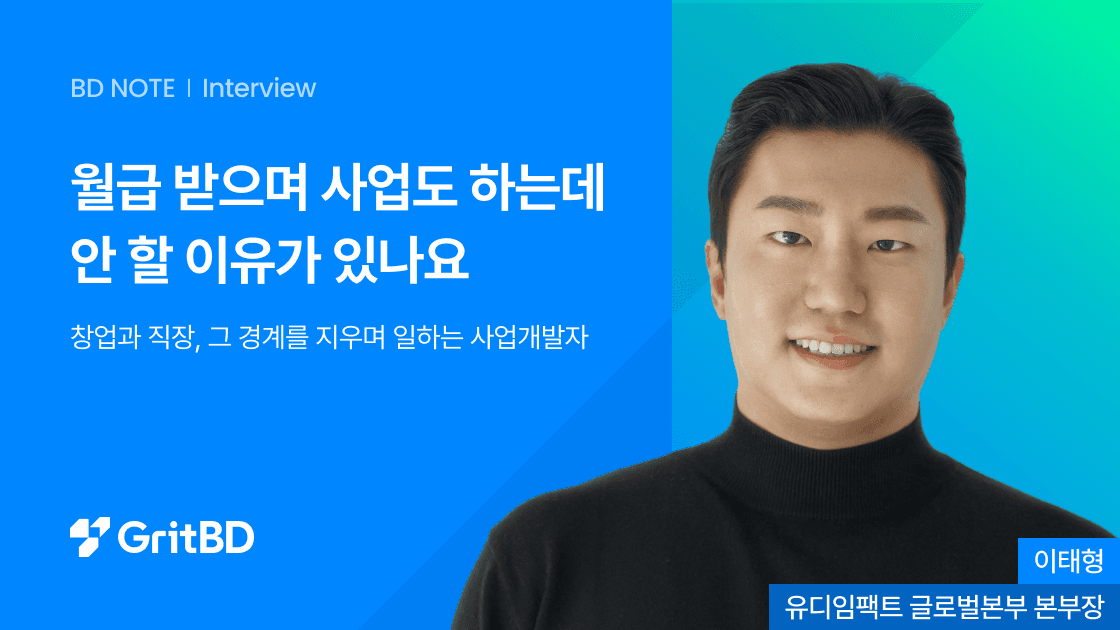
Starting a business versus joining a company. We often position these as opposites. The entrepreneur gains freedom but accepts risk, while the employee chooses stability but surrenders some freedom. But BD professional Lee Tae-hyung didn't pick one over the other. Why did a founder who exited a successful venture return to corporate life? And why does he keep one foot in business even while holding a job? Is he an entrepreneur or an employee today?
This interview follows one person's journey along the blurred line between business and employment.
Interview Navigation
1. The founder's instincts revealed through part-time work
2. Why he chose a job without stopping his business
3. The principles of a hands-on BD professional
4. A new challenge in India and a final dream
Q. You're doing many things at once. I'm curious how you introduce yourself. Could you start with a brief self-introduction?
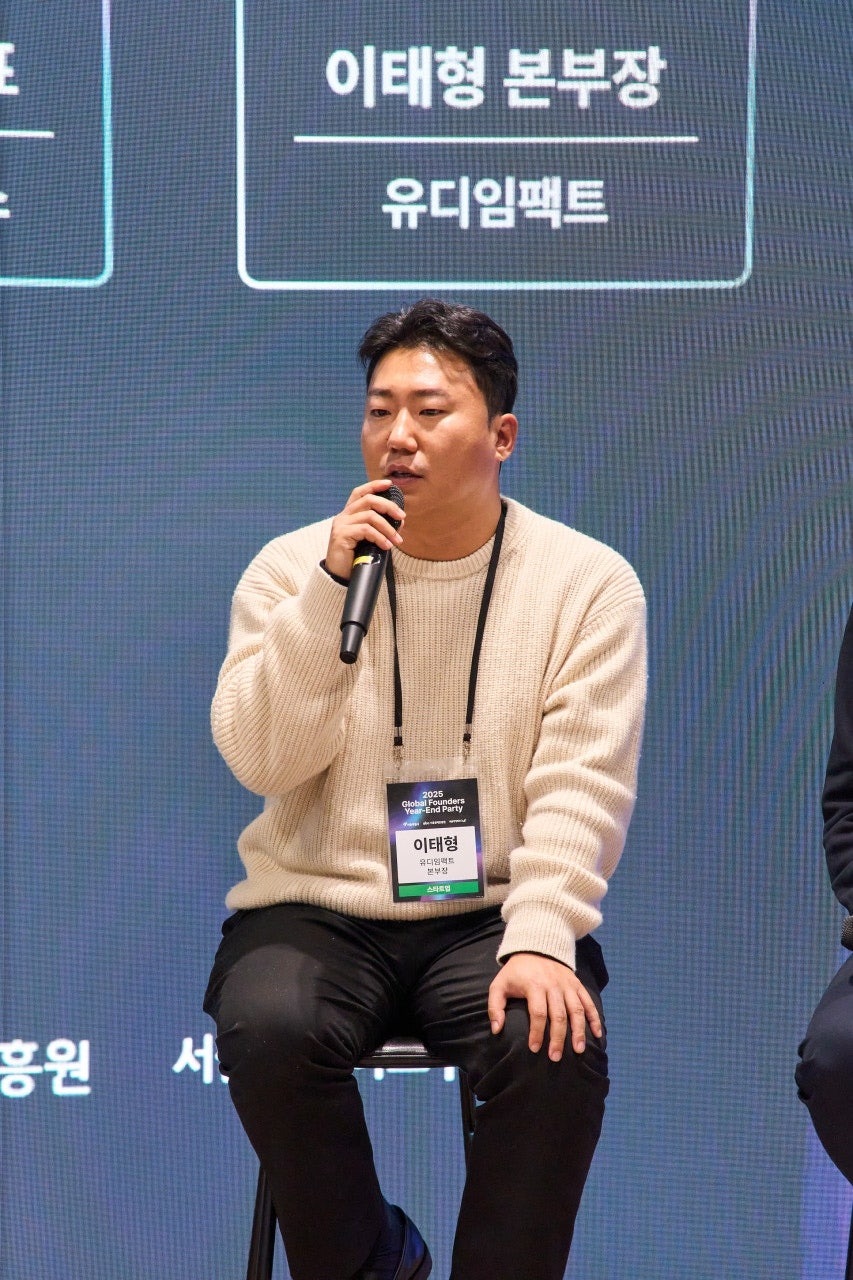
I introduce myself as someone who has decision-making authority in whatever I do. Right now I lead the global division at UDImpact, an entrepreneurship education company. I'm responsible for various projects creating a new market—entrepreneurship education—where none existed before, in Japan, Indonesia, India and beyond. The global division was launched last year and produced meaningful results in just one year. Japan and Indonesia are establishing themselves by winning projects with governments and major corporations. Among them, I'm focusing most on India.
Q. It's interesting that you introduce yourself not by a specific skill but as 'someone who makes decisions.' Come to think of it, your career began with a startup, so you've been making decisions the longest. Your first career was founding a company, not joining one. Was there a trigger that made you decide to start with business?
There wasn't one clear trigger. But my father's influence was the biggest. My father spent nearly 40 years at one company. He started as a junior employee and became Pulmuone's CEO last year. He's the person I respect most, and even now he's who I ask for business advice most often. But when I was young, things felt different. Watching my father, I had thoughts that seem naive now: 'Doesn't it take too long for circumstances to improve on an employee's salary?' 'Couldn't I get there faster?'
From school days I thought I was quick-witted and good at seizing opportunities. My major was physical education, and I worked part-time teaching youth sports. But I wanted to earn more than the hourly wage. So I made direct proposals to the center owner: 'Let me teach in English so we can create a premium course with higher pricing.' 'Let's teach exercise to the mothers who bring their children.' I kept devising ways to generate more revenue in the same time, without anyone asking me to.
Same with English tutoring. Since I couldn't earn what I wanted teaching one student at a time, I bought ad space in the local paper to promote group tutoring and eventually ran it almost like an academy. I didn't realize it was entrepreneurship at the time. Looking back, I was always approaching things the founder's way.
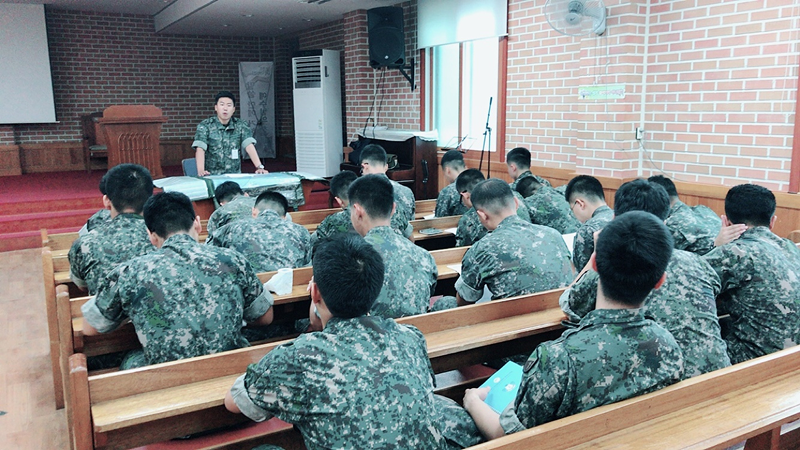
Leadership was probably somewhat innate too. My favorite anime was One Piece, and the journey of adventuring together toward a dream made my heart race. I served as an officer in the military. Meanwhile my friends got jobs a year or two ahead of me, and they all hated their companies. Watching friends who dreaded going to work every day and found no joy in their work, I thought, 'Corporate life isn't the life I dreamed of.' So I chose entrepreneurship without much hesitation.
Q. Hearing you, I think you were born an entrepreneur. That makes me more curious about your first venture. Your first business exited, right?
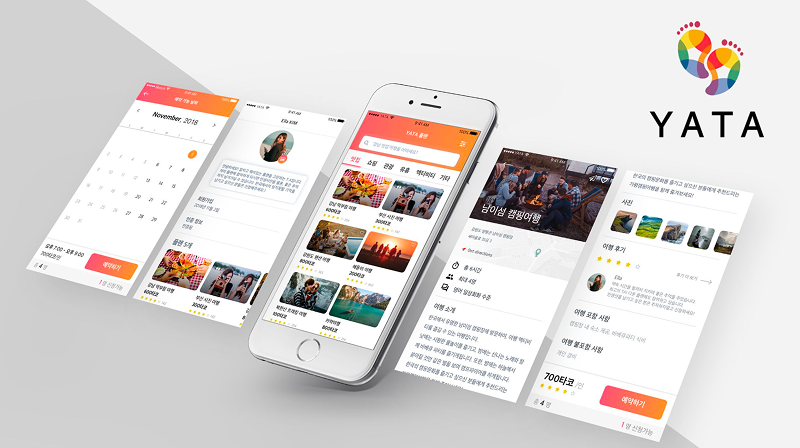
I spent my school years abroad, so I had many foreign friends. Even after graduating and returning to Korea, I naturally had many opportunities to meet friends visiting Korea and foreigners living here. K-culture is widely known now, but back then people didn't know about or think to visit regions beyond Seoul's main tourist sites. Korea has diverse culture and attractions in each local area, and I wondered what if I could connect them.
So I launched a Korean local tourism platform that worked like today's Airbnb Experiences. Since such opportunities didn't exist then, it went viral among foreigners. We secured stable traffic, the results were recognized, and we exited three years after launch.

Q. You produced results quickly from your first startup. Someone like you would probably do business again after exiting, but surprisingly you joined a company. There must have been a reason.
I did join a company, but I didn't stop doing business. I continued running businesses in parallel even while working at a company. I deliberately looked for companies where that was possible. So I've never once taken a break from business to this day. I worked hard on company work during office hours, and after work I spent at least a little time daily on my own ventures. For me, business isn't stress—it's fun. When someone throws out an idea saying they want to do this kind of business, I think it through with them, share my thoughts, help with what's needed, and business naturally continues.
Q. In that case, wouldn't it be better not to go to a company and spend that time doing more business instead?
After starting a business, I found it harder to grow myself than I'd thought. To grow you need to build expertise or get external stimulation, but the work you do as a founder tends to be repetitive, and focusing on just one business made me feel stuck in place. Meanwhile, friends working at companies seemed to get scolded and flounder daily as juniors, but as time passed they had broader experience and much deeper market understanding than me.
The process of having a mentor help you in your junior years, gaining perspective because of it, and growing step by step that way. I wondered if I'd missed that learning period by starting my business too soon. I opened up about this worry to my father. It turned out a colleague of his had left to join a startup called Jiguin Company, and my father suggested I get advice from him. That person graciously invited me to come learn the work, and that's where I began my first corporate job.

But I had no idea what role to pursue. I had planned platforms and even raised investment, but I didn't have the chops to jump straight into strategy or investor relations. I decided to start over with sales and joined the sales team. When I was running my startup, I'd gone out and sold my own product, so I figured I could do something.
Q. Did working at a company turn out to be as much of a learning experience as you expected?
Selling on my own versus working on a sales team turned out to be completely different. Beyond just selling, I learned how to manage the sales funnel, how to follow up with the next cold action, how to manage revenue, and why baseline sales matter most. I learned the fundamentals of being a salesperson from scratch and built real skill.
Looking back, though, I wasn't just doing sales—I was doing business development the whole time. Without anyone telling me to, I proposed moving from offline to online, and when I thought we could create a new market with a certain product, I took the initiative to sell it on Amazon US and even ran crowdfunding campaigns on Indiegogo and Kickstarter. I was always thinking about how this company could scale up.
Building on all those valuable lessons from my first company, I moved on to different roles at other companies, and to this day I've been doing both employee work and entrepreneurial work side by side.
Q. From startups to domestic sales to global new business. It sounds like you've been doing BD nonstop. How do you define business development? Is BD as an entrepreneur different from BD as an employee?
At first I thought business development was something only founders did. Planning what business to pursue, finding the value you want to create, validating whether it actually works—only a founder can do that. So when I was a founder, I didn't really understand why there was a separate BD role.
But once I joined a company, my thinking changed. When a company reaches a certain scale, the CEO has more to do, and the difficulty and stages of that work change. There are more opportunities, but you don't know which ones will succeed, and if you don't act you'll fall behind. You absolutely need someone who keeps discovering those opportunities. I genuinely enjoy that work and want to be good at it, so I realized that not having to start my own company and being able to do it inside a company was actually a great opportunity.
Q. What do you think is an essential capability for a BD professional? Do you have any DOs and DON'Ts—things you always do or never do when doing BD?
I almost never do desk research on markets. These days AI does it better anyway. Instead of spending time on research, I go out and meet someone who actually knows that market. I think BD professionals need to be light on their feet. Information that comes out of people's mouths is much faster and more accurate than documents. If a market is already summarized in a report, you're already one beat behind.
Whenever I had to solve a new problem, I always tried to meet people connected to that problem first. Whether they were solving the problem themselves, had watched from the sidelines, or had already failed at it—it didn't matter. Thirty minutes with someone who's been there beats three days digging through materials at your desk.
Of course, no one will meet you if it's just for your benefit. So before I go to a meeting, I always sketch out a win-win picture. What can I give this person? What will this meeting mean to them? If you don't prepare that in advance, the meeting won't even happen. No matter how much I want to meet someone, if I can't answer those questions, the meeting won't materialize.
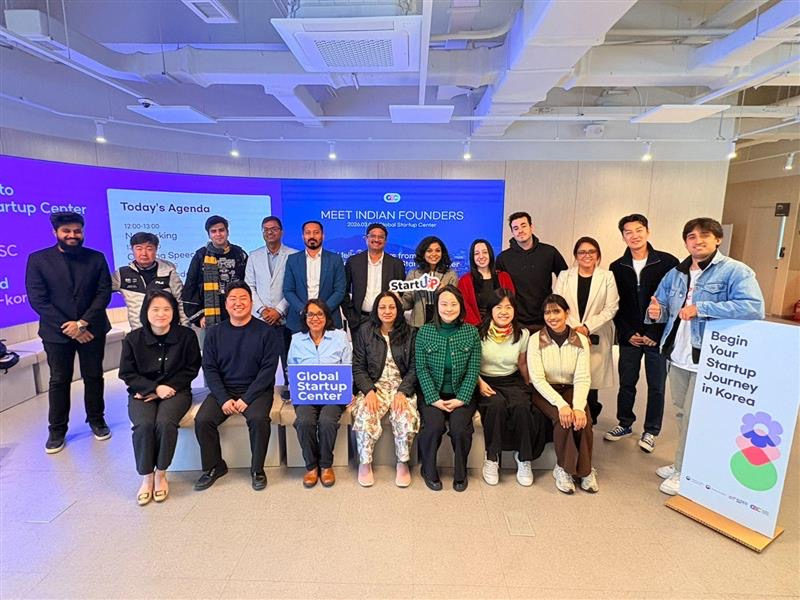
Q. You're doing business in India now, and I heard this is your first time in that market. Are you still meeting a lot of people?
India is where I'm feeling every moment just how important it is to meet people who have experience there. I especially want to meet people who've traveled extensively in tier-2 and tier-3 cities. On my last trip, I made several bad calls with the naive assumption that 'it's where people live, how dangerous could it be?' It wasn't just about business viability—these were situations that could have put my team members in actual danger. Looking back now, it was really reckless.
No amount of research from Korea will tell you where the line between danger and safety is. That's something only people who've actually been there can tell you. How far you can go safely, what behaviors to avoid in Indian business—there's definitely a domain that manuals can't capture.
Going through this experience, I realized that global is a whole different domain of business development. I didn't start global as an expert—I'm still working hard to build that expertise. The Korean network is comfortable, but I deliberately avoid it and try to keep meeting with local people as much as possible. That's why.
Q. Just hearing about it, this sounds like a very challenging year for you. What do you hope to achieve this year, both professionally and personally?
First, I want to achieve all the goals that UD Impact has set. For an employee, I think that's the number one vision and mission. And as a leader, I see my role as interpreting those goals well, turning them into motivation for the team, and moving forward together.
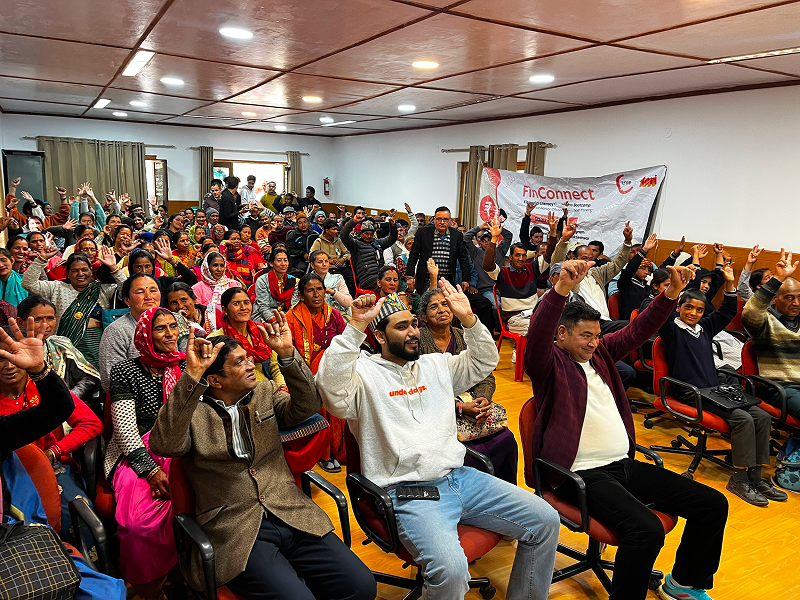
More specifically, I want to deliver entrepreneurship education to over 20,000 entrepreneurs in India and generate over KRW 1 billion in revenue from India alone. Right now, 100% of our revenue comes from clients in Korea that I communicate with directly, and I want to bring that share down to less than half and expand my team members' roles. Sales happening organically within India, with the Indian entity running on its own—now that I'm saying it out loud, there's a lot to do.
Q. Not as employee Lee Taehyung, but as entrepreneur Lee Taehyung—do you have any separate dreams or goals?
This might sound odd, but my dream is to see Korea's national team win the World Cup before I die. I actually dreamed of being a soccer player. I played overseas too, but came back to Korea because of an injury.
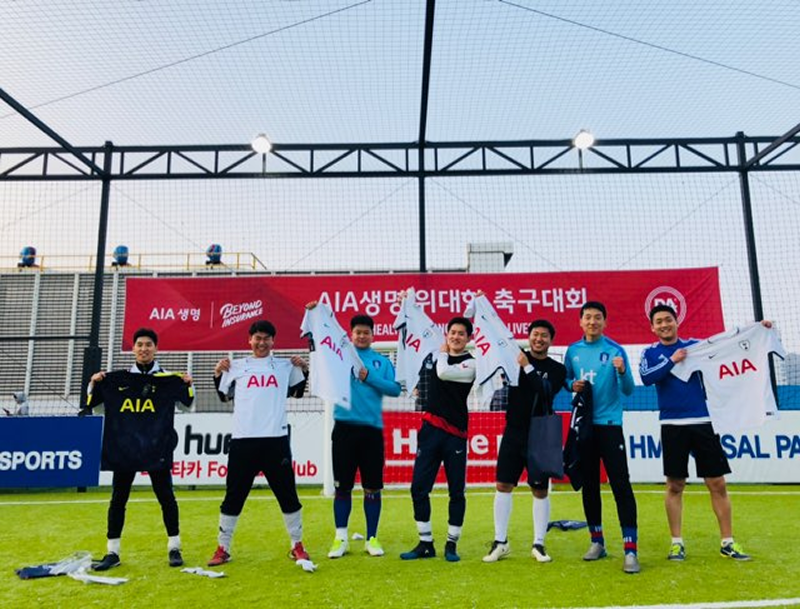
I can't play as an athlete anymore, but as an entrepreneur I want to contribute to the soccer industry. Someday when we win the World Cup, I hope the logo on the players' jerseys is from a company I've been involved with. If I connect with about 100 companies starting now, one of them might land it, right? (laughs)
'A person who makes decisions.' That's the first sentence Yi Tae-hyung used to introduce himself. At first, it sounded like a kind of pride that refused to be defined by a job title. But after hearing his whole story, I realized that one line was the most accurate description of the shape of his life.
The decision to turn his private English tutoring into group lessons during school. The decision to start a business instead of joining a company after the military. The decision to take a job instead of starting another business after exiting his first venture. The decision never to let go of business even while working at a company. The reason he can be both an employee and an entrepreneur, an entrepreneur and an employee, is ultimately because he has lived as 'the person who decides' in both roles. Job titles probably don't matter much to him. No matter where he is, he's someone who puts himself in a position where he carries the weight of decisions.
As I finished this interview, I thought that the next generation of BD professionals might increasingly resemble him. We're entering an era where the boundary between business and employment is blurring, where it's becoming more natural for one person to hold multiple identities at once. For BD professionals in that era, what they need most might not be a job function first, but the habit of putting themselves in the position of making decisions.
Edited & written by Yi Hye-mi gbd.hyemi@gmail.com