BD Insights
Loading...

그릿BD
주*********

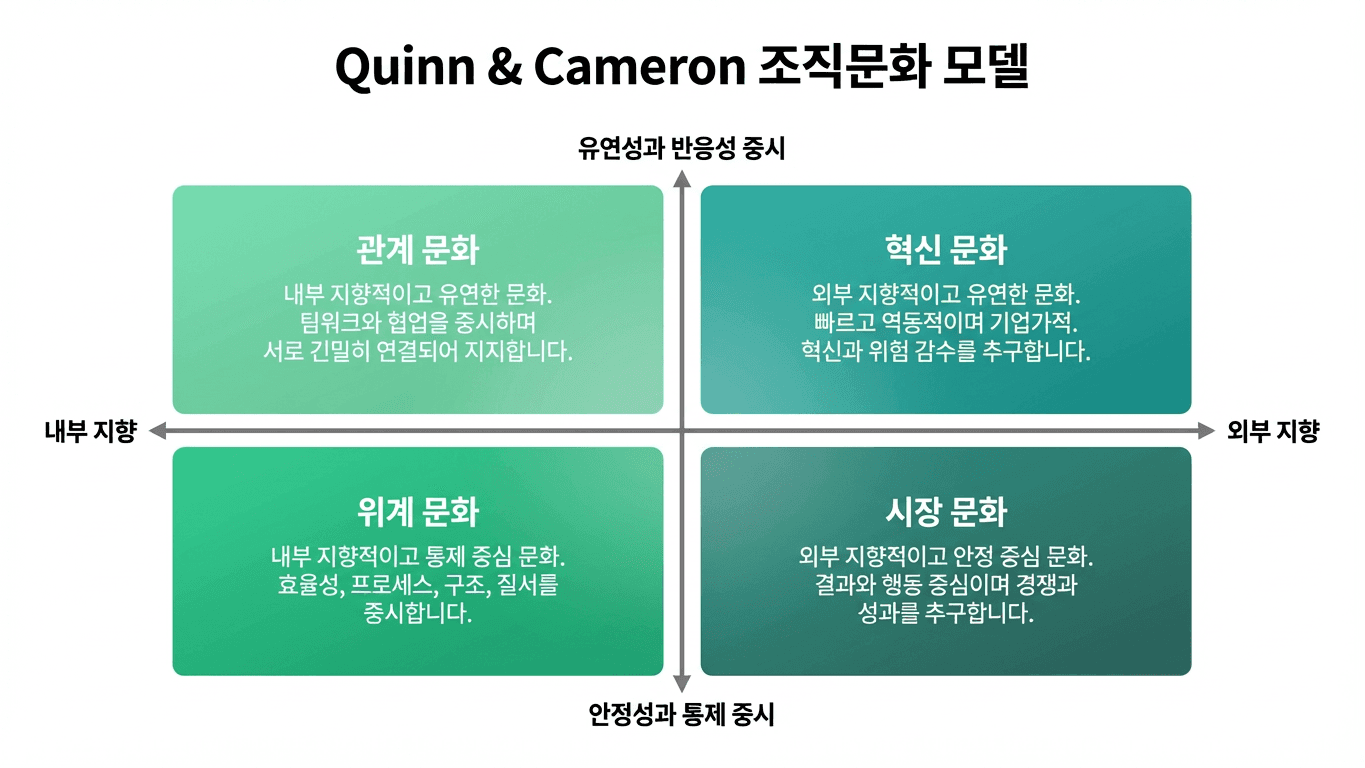
Gathering the best individuals doesn't make a team. This article outlines how to design a small but solid team using three principles—role design, execution autonomy, and communication structure—along with Quinn and Cameron's organizational growth model.
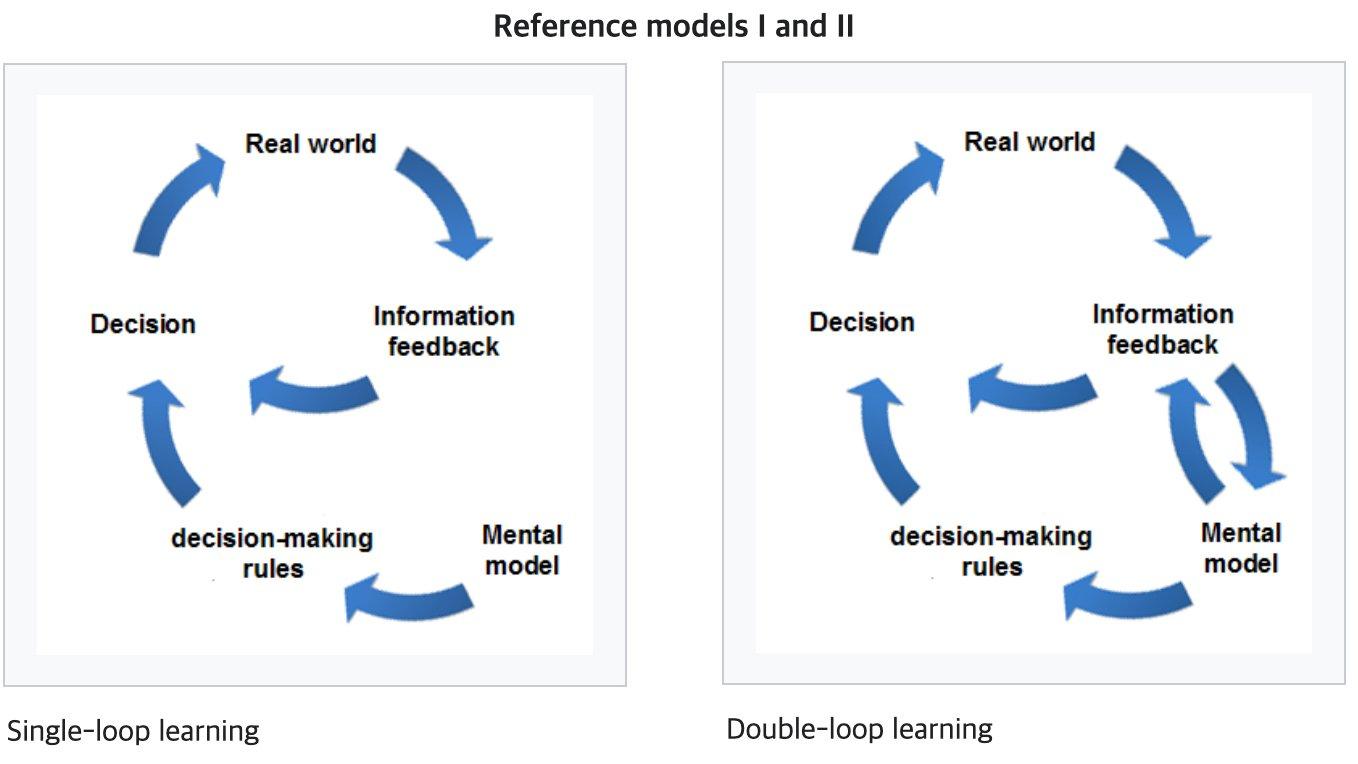
Among Google's countless projects, the success rate is only around 50%. They even operate a unique space called 'The Google Cemetery,' which displays the tombstones of discontinued services. Google autopsies these failures, identifying direct and indirect causes of problems, accurately recording them, and establishing countermeasures.

Even the clearest vision remains an empty slogan without collective efficacy—the shared belief that the team can execute it. An overly grand vision can overwhelm and paralyze a team. One of a founder's most important roles is not just to articulate a vision but to design and build the team's self-efficacy.
CODEX 18: How to Absorb External Opportunities and Turn Them into Growth Drivers
Open innovation is a paradigm that demands companies intentionally bring external ideas and technologies inside, share internal assets with the outside, and create value in order to survive and grow. In other words, it means breaking down organizational boundaries and raising the odds of innovation through active external interaction—and this clearly shows why 'absorptive capacity' is a core competitive advantage for modern startups.
Many founders run around trying to seize a good opportunity. It's like chasing butterflies with a net. Wise teams don't chase butterflies—they plant fragrant flowers. They build internal capability so that opportunities come to them.
Confucius said that at forty he reached the stage of being unshaken by doubt. For founders, conviction in the vision is essential. But when that conviction blocks out healthy external input, growth stops. Real clarity means holding firm to the WHY while keeping the HOW open.
Companies in the past pursued innovation through closed R&D, believing "all the best talent is inside our company." But in today's world, where knowledge and technology are distributed, relying solely on internal capability has clear limits.
Open innovation is a paradigm that demands companies intentionally bring external ideas and technologies inside, share internal assets with the outside, and create value in order to survive and grow. In other words, it means breaking down organizational boundaries and raising the odds of innovation through active external interaction—and this clearly shows why 'absorptive capacity' is a core competitive advantage for modern startups.
Strong teams, however, do not accept every external opportunity indiscriminately. Management scholar Jay B. Barney's 'VRIO Framework' was originally created to analyze a firm's internal resources and capabilities, but we can use this framework as a powerful filter for evaluating external opportunities.
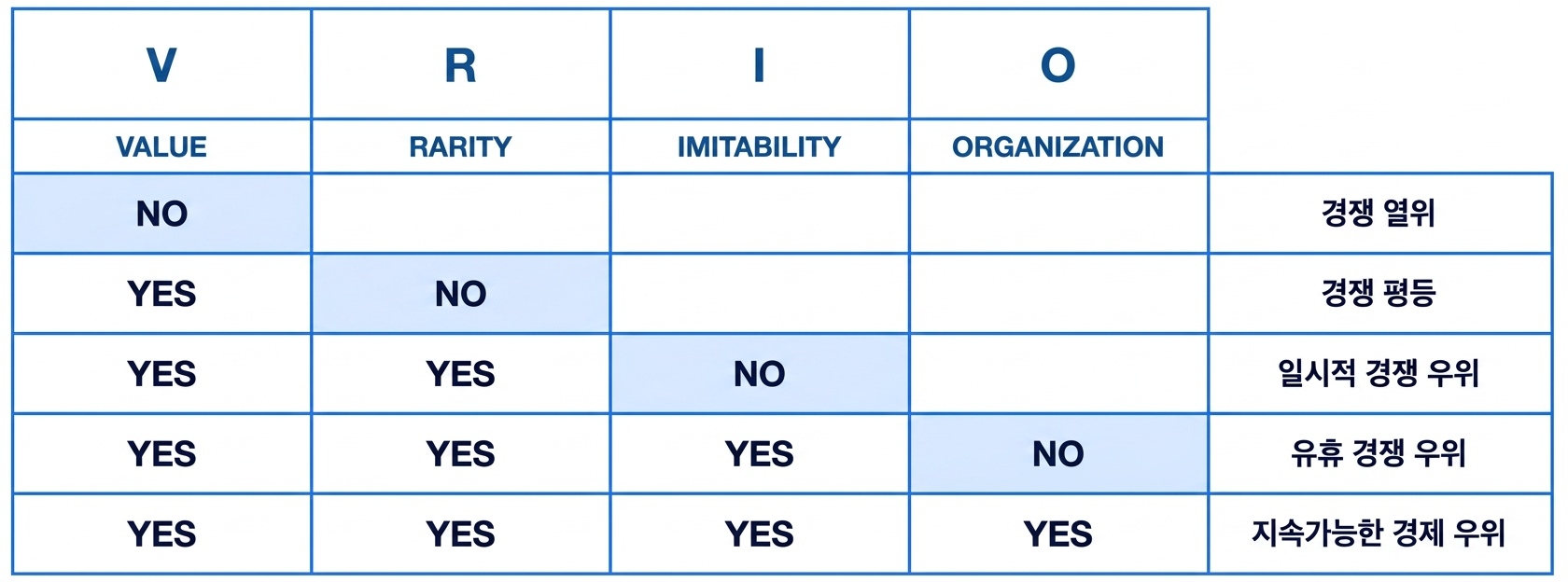
V Value
Does this opportunity align with our vision and strategy, and does it add real value?
R Rarity
Are the capabilities gained through this opportunity difficult for competitors to obtain?
I Imitability
Can competitors easily replicate the advantage created by this opportunity?
O Organization
Is our team ready to execute and internalize this opportunity?
Absorptive Capacity
Even opportunities that pass the VRIO test do not become outcomes by themselves. They must be adapted to the team's processes and culture to become a growth engine.
Sensing
Systematically monitor market, technology, and partnership trends to recognize needed opportunities.
Acquisition
Secure the opportunities you have sensed. This includes technology licensing, forming partnerships, recruiting talent, and so on.
Transformation
Reinterpret and adjust the acquired external knowledge to fit your team's context.
Incorporation
Fully integrate the transformed knowledge into the team's daily processes and decision-making, turning it into a repeatable asset.
Reddit is a prime example of a company that designed a structure for opportunities to come to them, rather than chasing opportunities.

Open Platform Design
Through the subreddit system, they built a structure where users can voluntarily create and run communities on any topic. The structure itself became a platform that absorbs every interest in the world.
Data and Reputation Asset Accumulation
Reddit built a reputation as the place where the most honest and in-depth conversations on any given topic happen. Google needed Reddit data to improve search quality, companies turned to Reddit for real user feedback, and media outlets monitored Reddit to spot trends.
The key point is that Reddit did not go out looking for partners—its open structure and accumulated reputation drew external actors in.
Step 1: Establish Criteria
Set VRIO-based criteria for which opportunities to accept and which to decline.
Step 2: Build Capability
Create processes to validate, execute, and internalize external opportunities as team assets.
Step 3: Strategic Exposure
Make your team discoverable to potential partners through technical blogs, conferences, community contributions, and the like.
Step 4: Build Reputation
Share successful collaboration cases externally. Create a virtuous cycle where one success brings the next opportunity.
Feedback Loop Questions
Q1. Does our team have clear VRIO criteria for evaluating external opportunities?
Q2. When a good opportunity comes, do we have a concrete process ready to turn it into organizational capability?
Q3. Are we a team that chases opportunities, or a team that makes opportunities come to us?
Q4. Do we have proven success stories that make external partners say, 'I want to work with that team'?
[Startup Codex 22]
Produced with permission from Brunch writer jaha Kim.